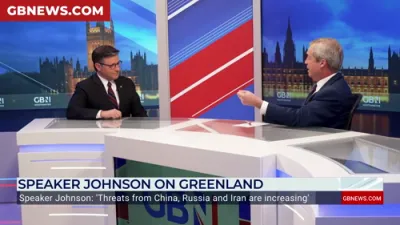
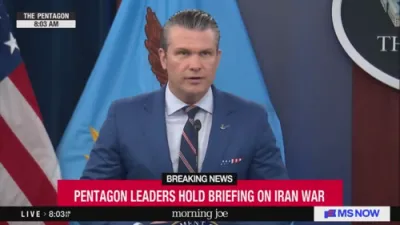
מייק דזשאנסאן ווערט געפרעגט וועגן טראמפ'ס פלאן צו איבערנעמען גרינלאנד
Nigel Farage publicly confronted U.S. House Speaker Mike Johnson over President Donald Trump’s renewed rhetoric on acquiring Greenland, warning that the dispute risks becoming the most serious fracture in U.S.-UK relations since the Suez Crisis of 1956. Speaking during a pointed exchange, Farage described the situation as grave, arguing that Trump’s approach signals a level of strain between the two allies not seen in generations.
“This is the biggest fracture in the relationship between our two countries since Suez in 1956. This is serious,” Farage said, pressing Johnson on whether the Trump administration fully appreciates the diplomatic consequences of its rhetoric. Farage’s remarks reflect growing unease in Europe over Trump’s January 2026 statements, which revive his earlier interest in acquiring Greenland from Denmark and frame the territory as a strategic necessity in countering Russian and Chinese influence in the Arctic.
Speaker Johnson sought to calm tensions, insisting that the disagreement does not threaten the long-standing “special relationship” between the United States and the United Kingdom. In a GB News interview, Johnson characterized the dispute as a temporary rift that diplomacy can resolve, stating confidently, “We’re going to get beyond this little rift.” He praised the measured response from UK Prime Minister Keir Starmer and emphasized that shared history, values, and security interests continue to bind the two nations closely.
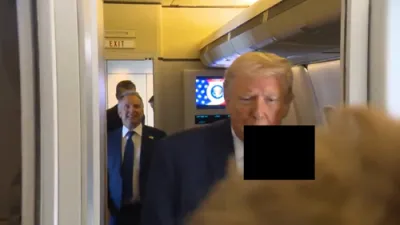
The controversy intensified after President Trump referenced the United Kingdom’s decision to hand over the Chagos Islands to Mauritius, calling it an act of “stupidity” and citing it as justification for a more assertive U.S. stance on Greenland. Trump’s comments, coupled with warnings of tariffs on European allies and even references to potential military options, have drawn sharp criticism from European leaders, including French President Emmanuel Macron and Prime Minister Starmer, who argue such rhetoric undermines NATO unity.
While Johnson attempted to downplay the long-term impact, Farage’s intervention underscores broader transatlantic tensions over Trump’s unilateral style and willingness to challenge established diplomatic norms. Supporters of the president argue that his blunt approach reflects a clear-eyed assessment of strategic realities, particularly in the Arctic, while critics warn it risks alienating allies at a time of global instability.
As debates over Greenland, NATO cohesion, and alliance obligations continue, the Farage-Johnson exchange highlights a deeper divide over how the United States should assert its interests without destabilizing relationships that have underpinned Western security for decades. Whether the dispute proves to be a passing disagreement or a defining moment in transatlantic relations remains an open question.