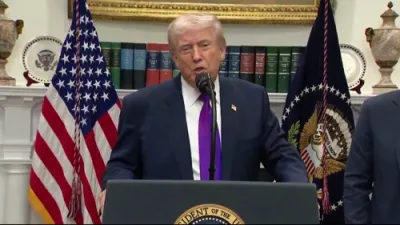
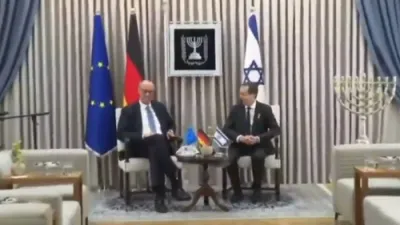
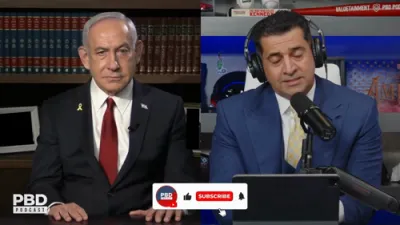
פרעזידענט טראמפ קריטיקירט הערצאג פארן אפזאגן פרעמיער מיניסטער נתניהו'ס באגנאדיגונג.
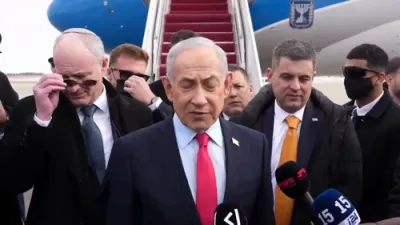
U.S. President Donald Trump has publicly called on Israeli leaders to grant a pardon to Prime Minister Benjamin Netanyahu as the Israeli premier continues to face an ongoing corruption trial, intensifying debate inside Israel over the balance between judicial independence and political leadership during a period of national security challenges.
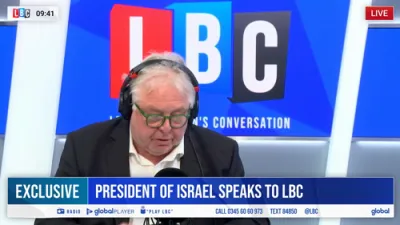
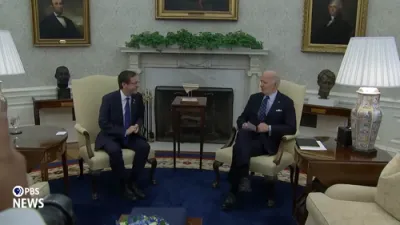
Speaking from the White House, President Trump sharply criticized Israeli President Isaac Herzog for declining to issue a pardon, describing the refusal as “disgraceful” and urging the Israeli public to pressure their head of state to intervene. Trump praised Netanyahu as a “great wartime prime minister,” highlighting his leadership during ongoing regional tensions and framing the legal proceedings as a distraction from Israel’s security priorities.
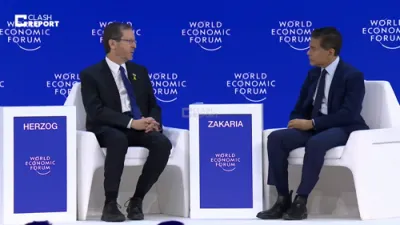
Netanyahu formally requested a presidential pardon in November 2025 in an effort to preempt a potential conviction on charges of bribery, fraud, and breach of trust. Under Israeli law, a pardon from the president typically requires an admission of wrongdoing, a condition Netanyahu has not accepted, complicating Herzog’s ability to act without appearing to undermine legal norms. Herzog has signaled that preserving the integrity of Israel’s judicial process remains a central consideration, reflecting widespread concern within Israel about maintaining institutional checks and balances.
Trump’s remarks underscore his longstanding political and personal alliance with Netanyahu, a relationship that has shaped U.S.–Israel policy coordination across multiple administrations. By elevating the issue publicly, Trump has inserted himself into an internal Israeli legal and constitutional debate, a move that supporters view as a show of solidarity with a key ally while critics argue it risks politicizing Israel’s justice system.
The controversy comes at a time when Israel is managing complex security challenges, including ongoing threats from Iranian-backed groups and the aftermath of conflict in Gaza. Netanyahu’s supporters contend that his experience and leadership are essential during wartime conditions and that prolonged legal proceedings could hinder national decision-making. Opponents maintain that the rule of law must apply equally, regardless of political stature, and that judicial independence is a cornerstone of Israeli democracy.
Herzog’s position reflects the limited but symbolically significant powers of Israel’s presidency, which include the authority to grant pardons but traditionally operate above partisan political disputes. Any decision to intervene in a high-profile corruption case involving a sitting prime minister would carry profound constitutional and political implications.
Trump’s intervention highlights the broader strategic alignment between his administration and Netanyahu’s government while also drawing international attention to the internal legal process unfolding in Israel. As the trial continues, the question of a potential pardon remains both a legal matter and a political flashpoint, touching on issues of governance, accountability, and national unity during a period of ongoing regional instability.