די וועימאו קארס ווערן צופיל סטאק
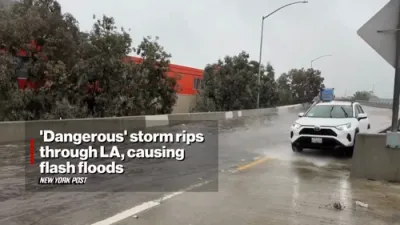
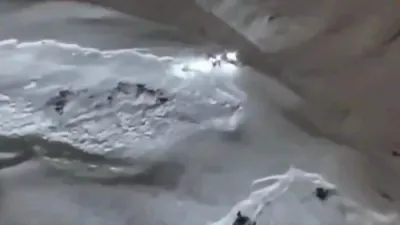
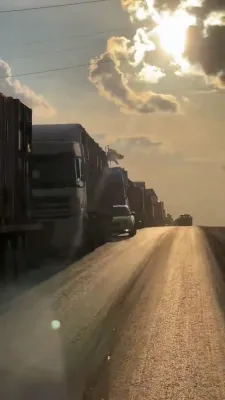
Waymo’s driverless robotaxi fleet was forced to pull over across parts of Los Angeles after sudden flash flooding dumped as much as 2.6 inches of rain on February 16, inundating major corridors including Wilshire Boulevard and low-lying districts such as Venice and Westwood. Videos circulating online showed clusters of autonomous Jaguar I-Pace vehicles stopped in formation, in some cases remaining stationary even after rainfall subsided, as the company paused service citywide to prioritize safety.
The incident occurred despite a recent software and sensor fusion upgrade announced just days earlier, intended to improve vehicle perception in adverse weather. Waymo’s autonomous system relies on a combination of LiDAR, radar, and camera inputs to build a real-time environmental model. However, heavy precipitation and standing water can degrade signal clarity, create reflective noise, and obscure lane markings, prompting the vehicles to default to conservative safety protocols. In practice, that meant pulling over and waiting for conditions to stabilize rather than attempting to navigate flooded streets with reduced sensor confidence.
Supporters of the move described the widespread pull-over as evidence that the safety stack functioned as designed, preventing potential collisions or misjudgments in hazardous conditions. In autonomous vehicle operations, a controlled stop is considered a fail-safe outcome when environmental variables exceed validated thresholds. Critics, however, framed the event as a high-visibility operational failure, pointing to the number of vehicles immobilized simultaneously and the extended time required to resume normal service.
The episode quickly reignited the long-running technical debate between LiDAR-centric and vision-centric autonomy models. Elon Musk has repeatedly argued that LiDAR performance degrades in rain, fog, and snow, favoring a camera-based approach that he claims more closely mirrors human driving perception. Footage of the stalled vehicles was widely shared alongside those past critiques, fueling comparisons between Waymo’s fully driverless commercial deployment and Tesla’s still-scaling autonomy program.
Operationally, Waymo’s decision to suspend service reflects the complexity of running a large, unsupervised robotaxi network in a dense urban environment where microclimates and drainage variability can change street conditions within minutes. Floodwater not only affects sensor reliability but also introduces physical hazards such as hidden debris, uneven pavement, and unpredictable vehicle behavior from human drivers. From a risk management perspective, a system-wide pause reduces exposure to edge-case failures that could undermine public trust.
The Los Angeles flooding event highlights a broader industry challenge: achieving consistent autonomous performance across all weather scenarios. While most current deployments are geofenced to regions with historically favorable conditions, climate variability is forcing developers to confront rare but high-impact events. Sensor redundancy, improved data labeling for adverse conditions, and more robust real-time validation models are all areas of active development, but this incident demonstrates that edge cases remain a critical barrier to full scalability.
For regulators and municipal partners, the sight of dozens of driverless vehicles stopped on public streets raises questions about traffic flow, emergency access, and coordination during extreme weather. Future operational frameworks may require tighter integration between autonomous fleet control centers and city emergency management systems to ensure rapid rerouting or remote relocation when environmental thresholds are exceeded.
Despite the disruption, Waymo retains a significant lead in fully driverless commercial service, with thousands of paid rides logged weekly across multiple cities. The company’s willingness to halt operations under unsafe conditions may reinforce its safety-first brand positioning, even as competitors use the moment to argue for alternative technical architectures. The coming months will likely see intensified scrutiny of how different autonomy stacks handle precipitation, standing water, and low-visibility environments, turning weather resilience into a central metric in the robotaxi competition.
Ultimately, the Los Angeles flash floods served as a real-world stress test for autonomous mobility at scale. The outcome—vehicles safely stopping rather than attempting uncertain maneuvers—illustrates both the progress and the remaining limitations of current systems. As the technology advances, the ability to maintain reliable service through unpredictable environmental conditions will be a defining factor in determining which platforms can transition from controlled deployments to truly ubiquitous transportation networks.