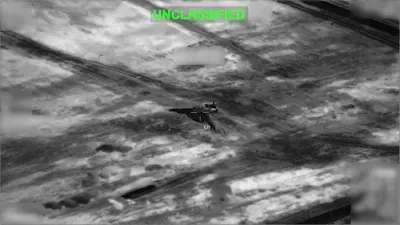
א איראנע דראון ווערט אראפגעשאסן
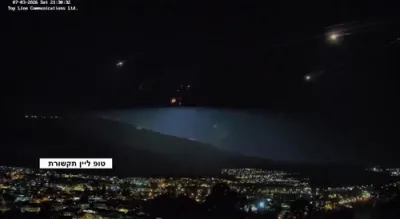
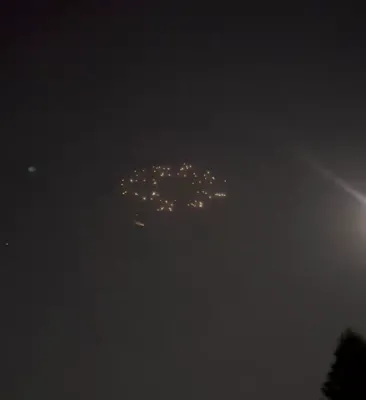
A wildlife photographer in Jordan has captured dramatic footage showing what appears to be Iranian cluster submunitions descending over Israeli territory following a ballistic missile strike. The video, recorded by Jordanian photographer Laith Al Abedi, shows numerous fiery streaks spreading across the night sky before falling toward the ground, a pattern consistent with cluster warhead munitions dispersing from a missile that had already been intercepted.
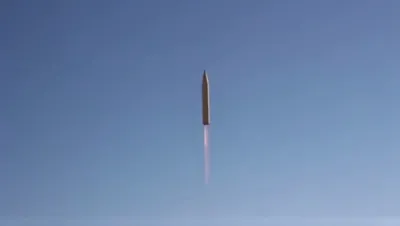
Cluster warheads function differently from conventional ballistic missile payloads. Instead of delivering a single explosive impact, the missile releases dozens or even hundreds of smaller submunitions during the final phase of its trajectory. These submunitions spread across a wide area, significantly increasing the potential damage footprint. The fiery trails captured in the footage appear to match the characteristic dispersal pattern associated with such munitions, suggesting that the missile carried a cluster payload.
According to statements from Israeli defense officials, Iran has launched multiple waves of ballistic missile attacks against Israel in recent days. The Israel Defense Forces confirmed that several of these missiles were equipped with cluster warheads designed to disperse submunitions after interception or during descent. Military officials indicated that at least seven separate attack waves have been launched since March 3 as part of Iran’s retaliation during the ongoing regional confrontation.
The footage recorded from Jordan provides a rare civilian vantage point of these events. Positioned across the border, the photographer was able to capture the moment when the missile’s payload separated into multiple descending fragments. The glowing trails seen in the video suggest that the submunitions ignited or heated during atmospheric descent, producing the streaking effect visible against the night sky.
Cluster munitions are designed to cover a wide target area and can pose particular challenges for missile defense systems. Even when the main missile body is intercepted, the dispersal of submunitions may still allow fragments to fall over a broad area. For this reason, the use of cluster warheads in ballistic missiles represents an escalation in the complexity of the threat faced by air defense networks.
The attacks occur within the context of a broader military confrontation involving Israel, the United States, and Iran. In recent weeks, American and Israeli forces have conducted extensive operations targeting Iranian nuclear facilities, missile launch infrastructure, and command centers. These actions were intended to reduce Tehran’s ability to produce and deploy long-range weapons capable of threatening regional stability.