די פאלשע באשולדיגונג פון טאקער קארלסאן אויף חב"ד
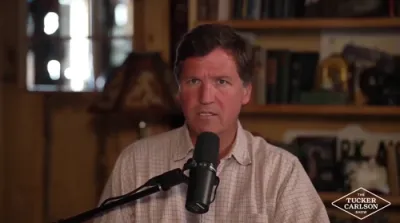
On March 4, 2026, Tucker Carlson claimed in a televised monologue that Chabad-Lubavitch, a Jewish religious outreach movement, is the real force behind U.S.-backed Israeli strikes on Iran, alleging the group aims to destroy the Al-Aqsa Mosque and rebuild the Third Temple. Carlson framed the narrative as a “holy war” orchestrated by Chabad, suggesting that Israel is forcing America into the conflict under the group’s influence.
While Chabad prayers include requests for the rebuilding of the Third Temple—a spiritual aspiration shared by observant Jews for nearly 2,000 years—these prayers are religious in nature and not calls to violent action or the destruction of Islamic holy sites. Chabad members also run schools, synagogues, preschools, and charitable programs, including drug rehabilitation and community support initiatives.
Carlson’s claims effectively shift blame for geopolitical conflict onto a peaceful religious movement, amplifying dangerous conspiracy narratives. By mischaracterizing a group that engages primarily in charity, education, and spiritual outreach, such rhetoric can inadvertently fuel antisemitic sentiment and place communities at risk. Observers note that Carlson’s pattern of commentary recently avoids directly naming political leaders he critiques, instead redirecting controversy toward Chabad as a seemingly “safe” target for attack.
Chabad remains focused on its core missions: religious education, community service, and outreach to secular Jews. The group’s spiritual focus on the Temple and the coming of the Messiah has no connection to military campaigns or geopolitical manipulation. Experts caution that misinforming audiences about Chabad’s intentions is not mere political commentary—it poses tangible dangers to congregations, schools, and families worldwide.
In summary, while Carlson’s monologue frames Chabad as a hidden driver of war, the facts demonstrate the opposite: Chabad is a decentralized religious organization dedicated to faith, education, and charity. Misrepresentation of such groups undermines public understanding and endangers the communities it purports to discuss.