אוקריינא שיסט אראפ א רוסישע העליקאפטער
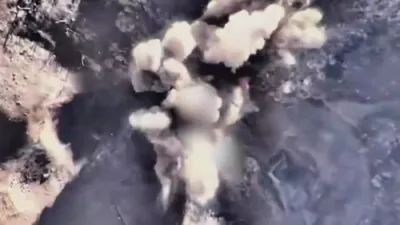
Verified battlefield footage published on March 20 appears to show a Ukrainian FPV drone striking a Russian Ka-52 attack helicopter in the Pokrovsk sector of Donetsk Oblast. Reporting from Ukrainian and defense-focused outlets says the helicopter was hit near Pokrovsk by a fiber-optic-controlled FPV drone, causing it to crash before a second drone targeted the wreckage. The incident has drawn wide attention because it appears to show a relatively cheap drone destroying one of Russia’s most advanced and expensive rotary-wing assets.
The strike also highlights one of the defining realities of this war: cost asymmetry. A low-cost FPV drone can threaten or destroy equipment worth millions, forcing Russia to operate expensive aircraft under constant danger even near the front. Reuters reported this month that Ukraine’s fast, low-cost interceptor drones have already become a crucial and scalable part of its broader air-defense and battlefield toolkit, reinforcing how central drone warfare now is to Kyiv’s military strategy.
According to the available reports, the operation involved Ukrainian drone operators in the Pokrovsk direction, where fighting has remained among the most intense on the front. The use of a fiber-optic FPV system is especially notable because such drones are harder to jam with electronic warfare, giving Ukrainian forces a better chance of reaching high-value targets even in heavily contested airspace. That technological edge is increasingly reshaping combat in eastern Ukraine and narrowing the traditional advantages of helicopters and other armored platforms.
I could not verify from the sources I checked the specific claim that Ukraine has downed more than 300 Russian helicopters by drones, though one current Kyiv Independent item says Ukraine’s Navy reported a separate Ka-27 destruction that would bring the total number of Russian helicopters Ukraine says it has destroyed overall since the full-scale invasion to 349. What is clearly supported is that Ukrainian media and military-linked reporting are treating the Ka-52 strike as another sign that drones are changing the economics and tactics of the battlefield. In practical terms, the footage is dramatic because it shows a modern attack helicopter no longer facing only missiles and anti-aircraft systems, but also small, precise, and expendable drone hunters.