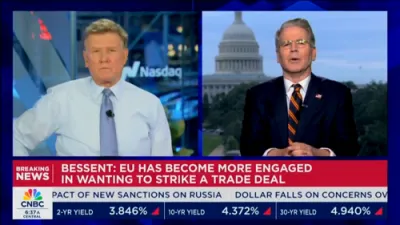
טרעזשורי סעקרעטאר בעסענט קריטיקירט דייטשלאנד פאר די טייערע קלימאט רענעוואציעס אין זייער לאנד
US Treasury Secretary Scott Bessent raised concerns over Germany’s approach to climate and housing regulation, pointing specifically to mandatory energy-efficiency renovation requirements. He described policies that require homeowners to invest tens of thousands of euros to upgrade properties to meet “green” standards. According to Bessent, such mandates have created significant financial strain for households across Germany. He suggested that these pressures are now translating into political consequences.
Bessent argued that policies tied to Germany’s broader climate framework, including EU-driven emissions reduction targets, have imposed high compliance costs on ordinary citizens. He referenced estimates placing renovation expenses between 30,000 and 50,000 euros for many households. While intended to accelerate energy efficiency and reduce emissions, these requirements have faced criticism for affordability concerns. The result, he noted, has been growing resistance among voters affected by the costs.
Germany’s climate-related housing regulations, including provisions under the Gebäudeenergiegesetz, have been part of a wider push across the European Union to decarbonize housing stock. However, implementation challenges have become increasingly visible, particularly given slow renovation rates and rising construction expenses. Recent political debates in Germany have also led to adjustments and softening of some of the stricter requirements. These developments reflect tension between climate objectives and economic feasibility.
Critics of the policy argue that rapid mandates risk undermining public support for long-term environmental goals. Supporters maintain that aggressive action is necessary to meet emissions targets and modernize aging housing infrastructure. Bessent’s comments emphasize the political risk of policies perceived as financially burdensome. He suggested that such measures can become decisive factors in elections when voters feel direct economic impact.
Overall, the remarks highlight a growing transatlantic debate over the cost and pace of climate transition policies. While European governments continue to pursue ambitious environmental targets, concerns over affordability and voter backlash are increasingly shaping the policy landscape. The discussion reflects broader questions about how to balance sustainability goals with economic stability. It also underscores how domestic policy choices can carry significant political consequences.