נתניהו מיט א מאפע, איז מסביר וויאזוי מדינת ישראל האט געטוישט די מאפע אין די מיטל מזרח דורכאויס די קריג
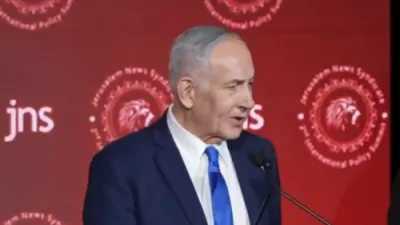
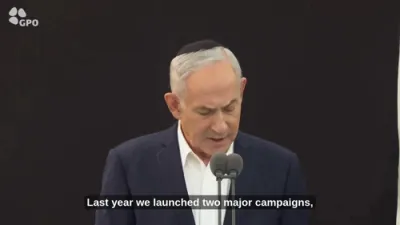
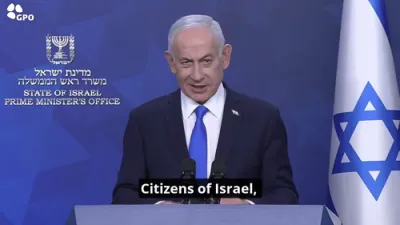
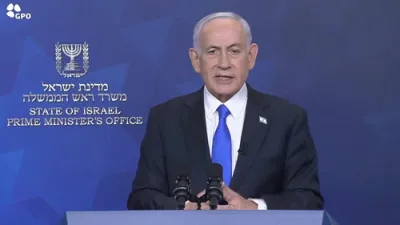
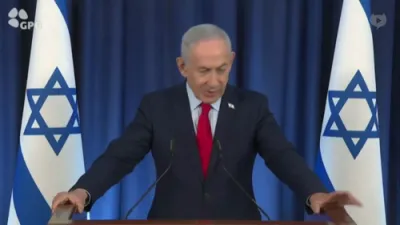
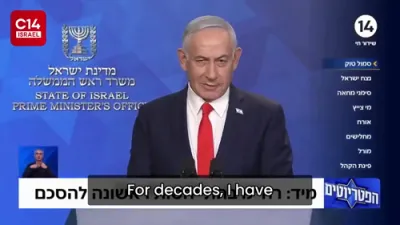
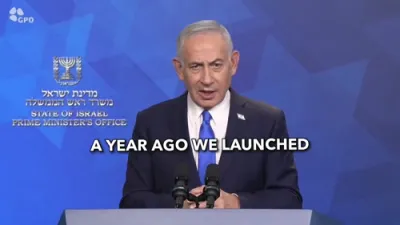
Israeli Prime Minister Benjamin Netanyahu delivered a sweeping national address declaring what he described as historic achievements following the conclusion of a major military campaign against Iran and its regional network. Speaking directly to the Israeli public, Netanyahu framed the operation as a decisive turning point, asserting that longstanding existential threats had been significantly reduced. He emphasized that Israel, alongside the United States, acted preemptively to confront Iran’s nuclear ambitions and missile capabilities. According to Netanyahu, these actions have fundamentally altered the strategic landscape of the Middle East.
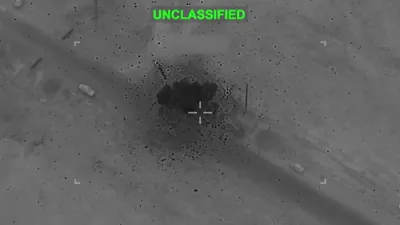
Central to the address was the claim that Iran’s nuclear infrastructure had been effectively dismantled. Netanyahu detailed a series of strikes targeting nuclear facilities, centrifuge systems, and uranium production sites, stating that Iran no longer maintains any active enrichment capability. He also highlighted the elimination of multiple senior nuclear scientists and key figures within the regime’s leadership. These actions, he argued, were the result of years of warnings that went unheeded by the international community, ultimately necessitating direct intervention.
Netanyahu also outlined the broader scope of the campaign, which extended beyond Iran to include its regional proxies. He cited operations against Hamas in Gaza, Hezbollah in Lebanon, and affiliated groups in Syria, Iraq, and Yemen as part of a coordinated effort to counter a multi-front threat. In Lebanon, he claimed that a significant portion of Hezbollah’s missile arsenal had been destroyed in a rapid and concentrated strike. Meanwhile, Israeli forces have reportedly gained control of more than half of Gaza’s territory, further consolidating their operational position.
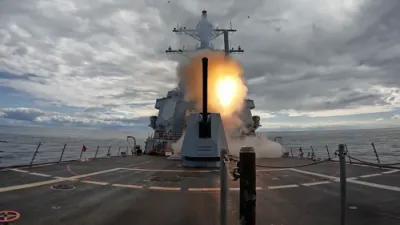
The prime minister underscored the unprecedented level of cooperation between Israel and the United States, noting that joint operations lasted for nearly 40 days. He described this alliance as a force multiplier that enabled both countries to achieve objectives that would have been difficult independently. Netanyahu also suggested that Israel’s demonstrated strength has opened new diplomatic opportunities, including reported outreach from Lebanon regarding potential peace discussions. This, he indicated, reflects a shifting regional dynamic in response to Israel’s military posture.
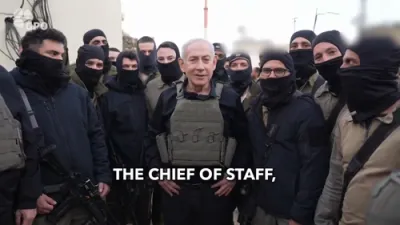
Despite the strong tone of victory, Netanyahu acknowledged that challenges remain and that the campaign’s long-term objectives are not yet fully complete. He called for continued unity and resilience, emphasizing the role of Israeli soldiers and the broader population in sustaining national security. The address concluded with a message of determination, reinforcing the government’s commitment to ongoing operations and future preparedness. As the region absorbs the impact of these developments, Netanyahu’s remarks signal a continued assertive approach to both military and diplomatic strategy.