CROSS-BORDER CATASTROPHE: Nepal-China Crossing Devastated, Death Toll Climbs
Gallery
Videos
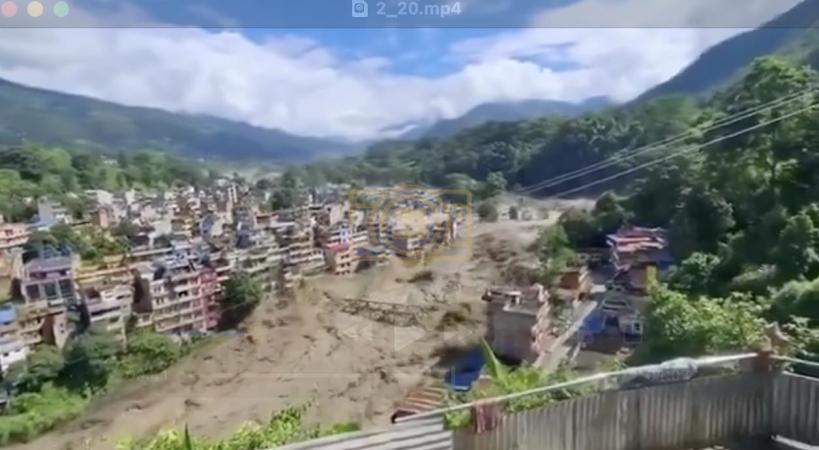
A wall of mud and debris tore through the Gyirong Port border crossing between China and Nepal on the morning of August 26, leaving a trail of destruction that officials are still struggling to fully assess. Chinese state media reported that the disaster originated in Nepal around 9 a.m. local time before spilling over into Gyirong county in the Tibet Autonomous Region, causing what was described as major casualties and missing persons at the border checkpoint. Footage from the scene shows the port being engulfed by an explosive mudslide, with rescue teams initially unable to make contact with anyone inside. The scale of the destruction has stunned observers, especially given that the area sits at a critical trade junction more than 1,800 meters above sea level in the Himalayas.
The human toll has continued to climb throughout the day as search efforts push forward under difficult conditions. By 8 p.m. local time, a rescue command center in Gyirong reported that three people had died and 265 remained missing following the landslide. Roads leading to the Gyirong Port crossing on the Chinese side, along with communications and power supplies, were completely severed by the disaster, complicating rescue and relief work. Despite these obstacles, a rescue team managed to reach one township within the county by 5 p.m. and was working to push into other cut-off areas.
China's response has been swift and heavily resourced, reflecting the severity of the crisis and the strategic importance of the crossing. Authorities dispatched roughly 600 firefighters equipped with search and rescue dogs, life detectors, and inflatable boats to the disaster zone, and the government has allocated approximately $17 million in emergency relief funds for immediate rescue and recovery work. President Xi Jinping personally called for "all-out" efforts to locate the missing and pushed for stronger monitoring and early warning systems to prevent further disasters from following this one. The involvement of national leadership underscores just how seriously Beijing is treating the unfolding emergency.
Beyond the immediate human tragedy, the disaster has struck at a border crossing central to trade between the two nations. Gyirong Port typically handles hundreds of millions of dollars in annual two-way trade and accounted for nearly a third of all China-Nepal commerce in 2024. This is not the first time the crossing has faced nature's wrath, either. In July 2025, floods swept away the bridge connecting the port to Nepal's Rasuwa crossing, halting goods trade for roughly six months. With rescue operations still active and the death toll unresolved, officials on both sides of the border are bracing for the numbers to shift as more of the affected area becomes accessible.