A NATION SEARCHES: Nepal Landslide Toll Climbs Past 1,000 as Hope Fades
Gallery
Videos
The death toll from the catastrophic landslide and flash flood that tore through Nepal's Bhotekoshi River valley has climbed to 1,056, according to the latest updates from disaster officials, making this one of the deadliest natural disasters to strike the Himalayan nation in recent memory. The disaster began on August 26 when a massive glacier collapse near the Nepal-China border sent a wall of ice, rock, and mud crashing down the mountainside, overwhelming the Bhotekoshi River and the communities that line its banks. What started as a localized event in the remote Rasuwa district quickly became a much wider catastrophe as the surge of debris and water swept downstream into the Trishuli River system, carrying destruction into Nuwakot, Dhading, Gorkha, Tanahun, Chitwan, and other districts far from where the collapse first occurred.
Nearly a week after the disaster struck, roughly 4,000 people remain unaccounted for, a staggering number that includes hundreds of foreign nationals and workers who were trapped inside hydropower tunnels when the floodwaters hit. Search and rescue teams have been combing through debris-choked riverbanks and mud-buried villages, often relying on helicopters to reach areas that remain cut off by damaged roads and collapsed bridges. Thousands of security personnel from the Nepal Police, Nepali Army, and Armed Police Force have been mobilized for the effort, and reports indicate that more than ten thousand people have already been pulled from flood-affected areas since the disaster began. Despite that progress, officials have repeatedly warned that the death toll is likely to keep rising as crews reach more remote and inaccessible stretches of the valley.
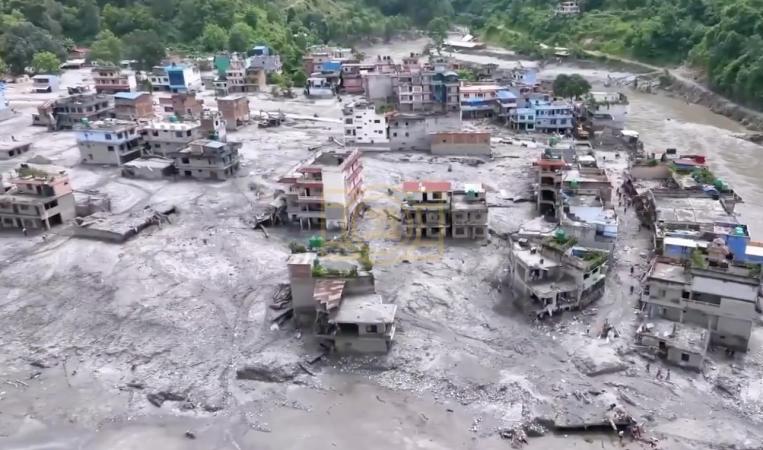
Footage from the disaster zone paints a grim picture of the scale of destruction. Helicopter rescue operations have plucked survivors from rugged, mountainous terrain where roads simply no longer exist, while other images show entire villages buried under thick layers of mud and rock. Rivers that once supported farming communities and hydropower operations are now choked with debris, complicating both rescue efforts and the recovery of bodies that have been found scattered far downstream from where the initial collapse occurred. The scale of displacement and destruction has already prompted Nepal's government to begin converting unused buildings into temporary morgues, a grim necessity given how overwhelmed local facilities became within days of the disaster.
Scientists investigating the cause of the collapse have pointed to unusually warm conditions and diminished snow cover around the glacier in the lead-up to the disaster, raising questions about the broader vulnerability of the Himalayan region as its glaciers continue to retreat. Researchers have cautioned that a direct link between climate change and this specific collapse hasn't been firmly established, but the region is known to contain thousands of glacial lakes, dozens of which are classified as potentially dangerous. As recovery efforts continue and the search for thousands of missing people stretches into its second week, Nepal now faces not only an immediate humanitarian crisis but also a rebuilding effort that officials estimate could cost several billion dollars in the months ahead.