ICE-ROCK AVALANCHE: Rescue Teams Hunt for 65 Missing Americans After Himalayan Flood Avalanche
Gallery
Videos
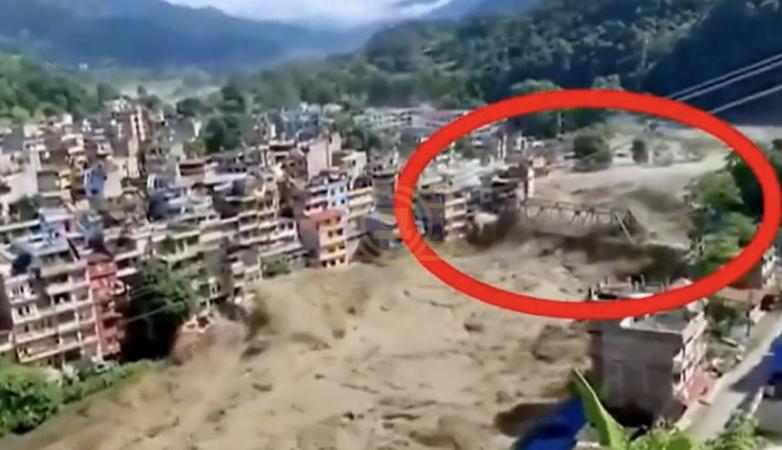
Rescue teams are racing against the clock in Nepal as they search for survivors after a massive wall of water, mud and debris tore through communities near the Tibet border. At least 65 Americans are among those still missing, according to officials in Nepal. The disaster struck on Wednesday, August 26, 2026, when part of a glacier high in the Himalayas collapsed, triggering an ice-rock avalanche that sent a powerful surge of water and debris racing downstream. Security video captured people with only seconds to react as the flood swept away vehicles, buses and entire buildings. One survivor described the moment vividly: “The floods came in suddenly and exploded like a bomb.”
Officials now believe the powerful landslide, caused by a section of glacier breaking away at high elevation, unleashed an avalanche of ice and rock that blocked a river before releasing a catastrophic flood. The surge entered the Lhende River system and roared through areas including Rasuwa district in Nepal and Gyirong County in Tibet. Water levels in connected rivers rose dramatically within minutes, carrying mud, boulders and debris that destroyed roads, bridges and homes. Settlements near the border crossing were among the hardest hit, with entire stretches of infrastructure vanishing under the torrent.
The human toll continues to climb as search operations intensify. Hundreds have been confirmed dead in Nepal, while more than a thousand people remain missing across both countries. Among the missing are hundreds of foreign tourists and Hindu pilgrims who had been traveling toward Mount Kailash. The presence of so many international travelers has drawn global attention, with families in the United States and dozens of other nations anxiously awaiting news. Many of the affected areas remain cut off, forcing rescue crews to rely almost entirely on helicopters to reach survivors and deliver aid.
The Red Cross estimates that at least 10,000 families have lost their homes in the disaster. Buried roads and destroyed bridges have left some of the worst-hit zones accessible only by air, slowing the pace of relief efforts. Emergency workers face the dual challenge of locating those still trapped under debris while monitoring upstream conditions for further threats. Chinese authorities have warned of a potential dammed lake in the Gyirong area that could release additional flooding if it fails. Clear skies over the region have offered some relief for helicopter flights, yet the scale of destruction continues to complicate every phase of the response.
Survivors recount scenes of chaos as the sudden wall of mud and water arrived with little warning. Vehicles and buildings were carried away in seconds, leaving behind a landscape of rubble and silt. Local residents and visitors alike scrambled for higher ground, with many describing the force of the surge as overwhelming. The combination of glacial collapse, high mountain terrain and dense settlement along the river valleys created ideal conditions for such rapid and widespread devastation. Experts note that warming temperatures in the Himalayas have increased the instability of glaciers, raising the risk of similar events in the future.
As the search for the missing continues into a second day, the focus remains on reaching isolated communities and recovering those still unaccounted for. International teams are coordinating with Nepali and Chinese authorities to expand the helicopter airlift and stabilize remaining infrastructure. For the families of the 65 missing Americans and the many others from around the world, each passing hour brings both hope and deepening anxiety. The full extent of the loss will only become clearer once rescuers can access every devastated stretch of the border region.