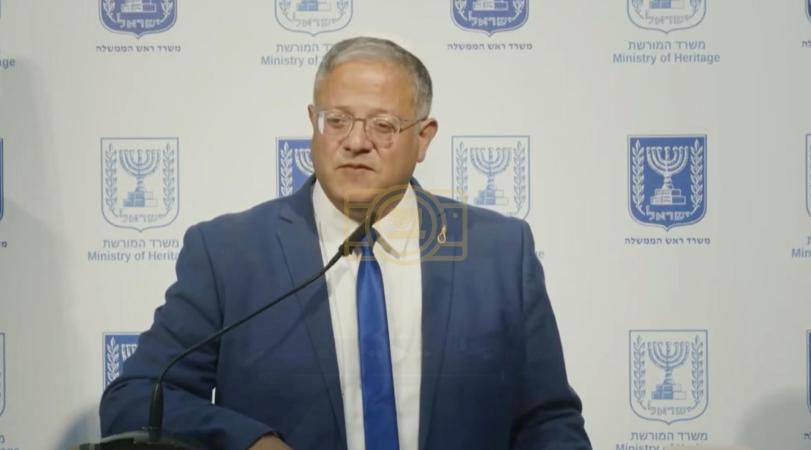
Ben-Gvir Blasts PM Over Altalena Discovery Credit and Accuses Him of Begin-Style Boycott.

Gallery
Videos
Israeli leaders clashed publicly this week over credit for locating the long-lost Altalena shipwreck, a vessel sunk in 1948 during the War of Independence. Prime Minister Benjamin Netanyahu released a separate statement announcing the discovery at a depth of 503 meters while deliberately avoiding a joint appearance with National Security Minister Itamar Ben-Gvir. The find was made possible by advanced sonar technology deployed under the direction of Heritage Minister Amichai Eliyahu’s ministry. Both men spoke of national unity and the Altalena Affair’s historic role in preventing civil war, yet their actions revealed deep political friction. The episode has quickly become a symbol of the uneasy partnership inside the governing coalition as elections loom.
Ben-Gvir did not hold back during the event marking the discovery. He directly attacked Netanyahu by invoking Menachem Begin’s past experience of being boycotted, implying that the prime minister had deliberately shunned sharing the stage. The reference carried sharp historical weight, given Begin’s leadership of the Irgun and the bitter legacy surrounding the original Altalena confrontation. Ben-Gvir’s remarks framed the snub as more than a scheduling choice and cast it as a personal and political slight. The exchange underscored how even a moment of national heritage can be turned into a weapon in today’s coalition battles.
The Altalena itself remains one of the most sensitive chapters in Israeli history. The ship, carrying weapons and fighters for the Irgun, was shelled by the newly formed Israel Defense Forces on the orders of David Ben-Gurion, resulting in deaths and a near civil war. Its sinking off the coast of Tel Aviv has long been remembered as a painful but decisive step toward state monopoly on force. Locating the wreck after nearly eight decades offers a rare physical connection to that traumatic episode. Officials stressed that the discovery should serve as a reminder of the cost of internal division rather than an opportunity for fresh political point-scoring.
Netanyahu’s decision to issue an independent statement allowed him to claim a share of the achievement without standing beside Ben-Gvir. The move was widely interpreted as an attempt to manage credit and optics within a fractious government. Meanwhile, the technical success of the search—using sophisticated sonar to pinpoint the vessel on the seabed—received less attention than the political drama unfolding above the waves. Heritage Ministry teams had worked for months to map the site, yet their accomplishment was quickly overshadowed by the leaders’ public disagreement.
Coalition tensions have been simmering for months, and this episode has poured fresh fuel on them. Ben-Gvir’s open criticism of the prime minister in front of cameras signals growing confidence and willingness to challenge Netanyahu’s authority. At the same time, both men felt compelled to praise the ideal of national unity, revealing an awareness that the Altalena story still resonates with the Israeli public. The contrast between their words and their behavior left many observers questioning how durable the current government arrangement truly is.
As details of the wreck’s condition and exact location continue to emerge, the political aftershocks are likely to linger. The discovery has revived public discussion about the price of internal conflict and the fragile foundations of state authority established in 1948. Whether the moment ultimately strengthens or further strains the coalition will depend on how Netanyahu and Ben-Gvir choose to handle the next shared stage. For now, the Altalena has returned from the depths only to illuminate the cracks still running through Israeli politics.