NVIDIA'S NEW MUSCLE: Moby Robot Crushes Industrial Tasks in Record Time
Gallery
Videos
Physical AI is stepping into heavier, more demanding territory, and a new humanoid robot named Moby is leading the charge. Built by Noble Machines, Moby is designed for general-purpose industrial work, tackling tasks like material handling in some of the most punishing environments imaginable, including semiconductor manufacturing facilities. The robot runs on a combination of NVIDIA Isaac GR00T, Jetson computing hardware, and ADLINK edge AI systems, giving it the onboard intelligence and processing power needed to operate independently on a factory floor. Rather than being confined to simple, repetitive motions, Moby is engineered to handle the kind of unpredictable, physically demanding tasks that have traditionally required human labor.
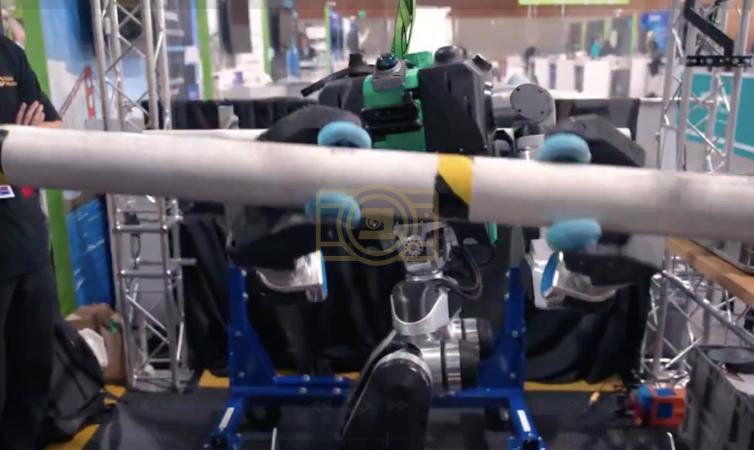
A 15-second demonstration video captures just how far this technology has come. In the footage, Moby is shown lifting and manipulating heavy objects, including large pipes and steel beams, during a live exhibition while team members watch closely nearby. The movements highlight both raw strength and a surprising level of dexterity, two qualities that are notoriously difficult to combine in a single robotic platform. Handling awkwardly shaped, heavy industrial materials without human intervention represents a significant leap for humanoid robots moving beyond controlled lab settings and into real-world industrial use.
What makes Moby's story even more remarkable is the speed at which it was built. Noble Machines initially projected the robot would take around four years to develop with a team of 50 engineers, a fairly standard timeline for this kind of complex hardware and software integration. Instead, the company managed to bring Moby to life in just 18 months using a team of only 15 people, nearly tripling their development speed while cutting their workforce needs dramatically. That kind of acceleration doesn't happen by accident, and it points directly to the tools that made it possible.
The secret behind this leap in efficiency lies in NVIDIA's full simulation-to-deployment pipeline. Noble Machines relied on Isaac Sim and Isaac Lab to train and test Moby's movements in realistic virtual environments before ever deploying it in the physical world, dramatically reducing the trial-and-error typically required with physical hardware. Layered on top of that, GR00T vision-language-action models gave Moby the ability to interpret its surroundings and respond to tasks with a level of adaptability that older robotic systems simply couldn't match. Together, these tools illustrate how quickly the barrier to building capable industrial humanoids is falling, and Moby stands as a clear signal of where physical AI is headed next.