NO SIGNING THIS TRIP: Trump Says He Is “Not Concerned" About West Philippine Sea Tensions as Marcos Delays Pax Silica Signing
Gallery
Videos
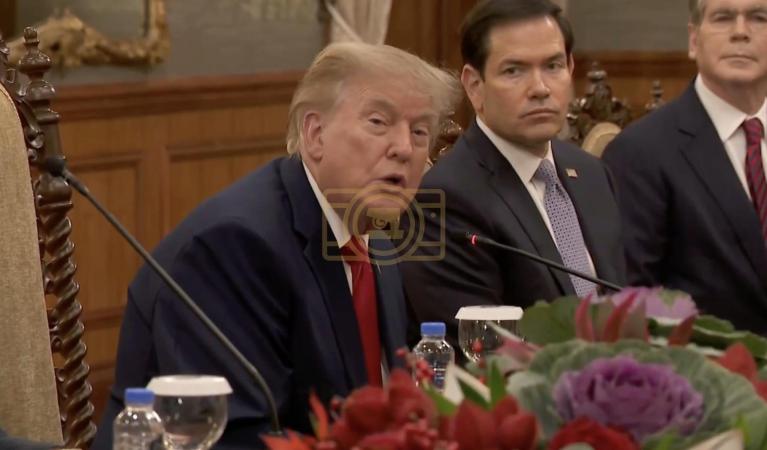
President Donald Trump said he was “not concerned at all” about tensions in the West Philippine Sea during his November 18 bilateral meeting with Philippine President Ferdinand Marcos Jr. at Malacañang Palace in Manila. Asked about the maritime dispute and the continuing tensions involving China, Trump responded, “I'm not concerned about that at all. That'll be taken care of.” His remarks came as the two leaders discussed strengthening the longstanding U.S.-Philippine alliance, including expanded defense cooperation, military support, trade, energy, and technology. Trump also reaffirmed Washington's commitment to the Philippines, while Marcos emphasized the importance of the two countries' decades-old security partnership. Another notable exchange occurred when Trump was asked whether the two governments would sign the Pax Silica agreement during his visit. Marcos immediately interjected, making clear that the initiative would not be signed or covered during the trip, a clarification that drew attention to one of the most controversial elements of the growing U.S.-Philippine technology partnership.
Pax Silica is a U.S.-led initiative designed to strengthen allied supply chains for artificial intelligence, semiconductors, critical minerals, and other advanced technologies while reducing dependence on China. The Philippines is expected to host a proposed industrial hub in New Clark City, Tarlac, within the Luzon Economic Corridor, intended to attract investment and expand the country's role in advanced manufacturing. However, the project has faced opposition from farmers, Indigenous communities, and activists who warn that industrial development could threaten land rights, livelihoods, water resources, and local communities. Some demonstrators have also characterized the initiative as an extension of American economic influence over the Philippines, while the Marcos administration has promoted the project as an opportunity to create jobs and attract high-value industries. Philippine officials have said the proposed development is intended to use designated buildable areas and avoid displacing farmers and Indigenous communities. Although no signing took place during Trump's visit, the initiative remains a significant issue in discussions over the future of U.S.-Philippine economic and strategic cooperation.