NO MERCY PROMISED: Trump Says Beaten Iran Could Still Get "Smacked" Again
Gallery
Videos
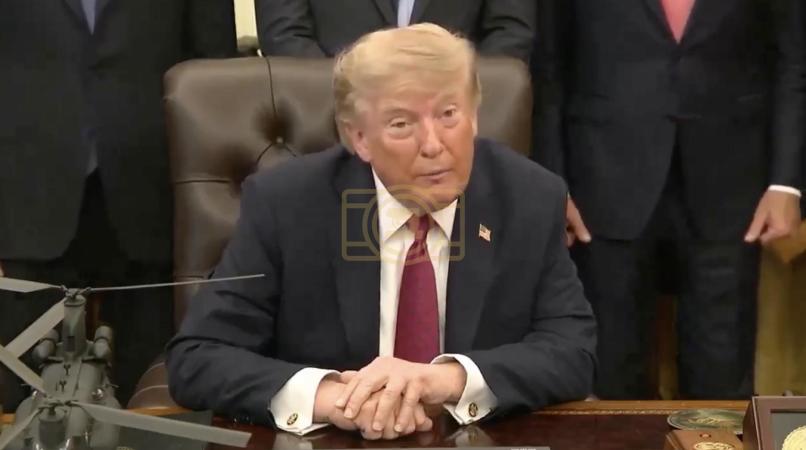
President Trump used blunt, unscripted language from the Oval Office this week to describe Iran's condition after six months of war, calling the country a "failed nation" with a devastated military and a leadership that is "largely dead." Speaking to reporters, he listed off what he described as the collapse of Iran's institutions: a currency in freefall, soldiers and police going unpaid, and inflation reportedly running as high as 350 percent. He said Iran's navy, air force, and surveillance capabilities have been almost entirely wiped out after months of American and Israeli strikes. Despite painting this picture of near-total collapse, Trump made clear the fighting isn't necessarily over, adding a pointed warning: "That doesn't mean we won't smack them."
The comments landed just a day after a US strike on Iranian military targets on Larak Island, and they followed a fresh round of tension after Iranian forces struck American bases in Jordan in retaliation for earlier US action in the Strait of Hormuz. Trump described the renewed American operations as "very limited" rather than a full return to open war, even as he emphasized that the door to further strikes remains wide open. He pointed to progress in the Strait of Hormuz specifically, saying commercial shipping has resumed at a steady pace, with dozens of vessels passing through nightly under US Navy protection. According to Trump, that security effort is a major reason oil prices haven't spiked the way many analysts feared they would once the conflict escalated.
Nuclear weapons policy came up as well, and Trump's answer sparked its own share of attention. When a reporter asked whether he had ruled out using a nuclear weapon against Iran, he called the question "stupid," then clarified that the answer is yes, insisting there's no reason to consider it given Iran's military situation. He reiterated a firmer, long-standing US position that Tehran will never be allowed to build a nuclear weapon of its own, framing it as a matter of global stability rather than a narrow US-Iran issue. Trump argued that if Iran had gone nuclear, the consequences for Israel and the broader region would have been catastrophic, and he suggested American cities could eventually have become targets too.
The remarks come against the backdrop of a war that began in February 2026 and has since drawn in US forces stationed across the Middle East, including troops from the Army's 82nd Airborne Division, whose families were recently informed that deployments could stretch into next year. Iran, for its part, has continued to face internal turmoil, with Trump previously accusing its leadership of killing more than 100,000 protesters and calling for war crimes trials. Whether this week's comments signal a genuine de-escalation or simply a pause before another round of strikes remains unclear, and Trump himself offered no firm answer, closing his remarks on the subject with a simple, open-ended line: "We'll see what happens."