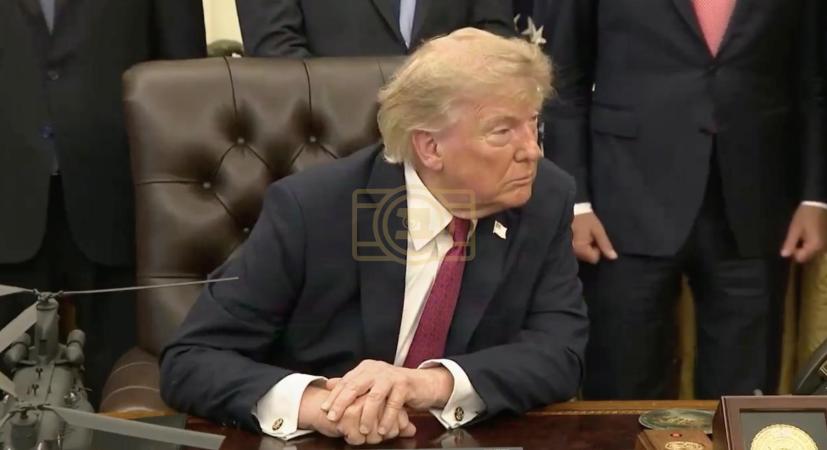
SAME RULES, BIGGER RESULTS: President Trump Explains Deportation Spike in One Word
Gallery
Videos
Asked directly what changed to produce a record-breaking month of deportations under his administration, President Trump gave a one-word answer: "Nothing." The response came as the Department of Homeland Security reported its highest monthly enforcement totals of Trump's second term, with Immigration and Customs Enforcement carrying out nearly 50,000 arrests and around 34,000 removals in July 2026 alone. Rather than pointing to any new legislation or policy overhaul, Trump framed the surge as simply the product of enforcing laws that were already on the books, suggesting that the only real shift has been a matter of will and resources rather than new legal authority.
That framing lines up with what has actually been happening on the ground over recent months. ICE has quietly ramped up operations nationwide, aided by a substantial funding boost tied to the One Big Beautiful Bill Act, which has already pushed billions of dollars toward border and interior enforcement efforts. Officials have also pointed to expanded self-deportation programs and a heavier emphasis on worksite enforcement as contributing factors, even as the agency has faced criticism for not releasing detailed underlying data to back up its numbers. By the fiscal year total reported back in June, DHS had already logged more than 356,000 deportations, and the July figures represent a continued acceleration rather than a sudden one-time spike.
For Trump and his administration, the "nothing changed" framing does double duty politically. It allows the White House to claim credit for delivering on campaign promises of mass deportation without having to explain away the fact that earlier months of his term fell short of those same targets, when arrests regularly outpaced actual removals by a wide margin. It also reinforces the broader America First message that existing law, when actually enforced without exception, is sufficient to produce dramatic results, sidestepping any need for Congress to pass new immigration legislation. Critics, however, have pointed out that the shift likely involved more than just enforcement intensity, noting increased staffing, expanded detention capacity, and a documented internal push from officials like White House Deputy Chief of Staff Stephen Miller to increase arrest numbers across the board.
Whether "nothing" truly changed or whether the surge reflects a combination of new funding, staffing increases, and shifting tactics remains a matter of debate among immigration analysts. What is clear is that the July numbers mark a genuine high point for the administration's enforcement efforts, arriving after months of public frustration from immigration hawks who felt earlier deportation totals lagged behind the rhetoric. With ICE's budget set to grow further and staffing expected to increase significantly in the coming years, the administration appears positioned to keep pushing those monthly totals higher, regardless of whether the underlying legal framework driving them has shifted at all.