AI RACE: Warns Against Data Center Bans as China Surges in AI.
JOHNSON: Falling Behind China in AI Race Poses Dangerous National Threat
House Speaker Mike Johnson issued a stark warning that the United States is locked in a critical AI race with China and cannot afford to fall behind. He stated that if China is able to leapfrog the United States in artificial intelligence, it would create a very dangerous situation for everyone across the country. Johnson made the comments while opposing broad moratoriums on data centers, arguing that such blanket restrictions would hinder America’s ability to compete. His remarks came during a campaign stop in Michigan supporting Representative Tom Barrett.
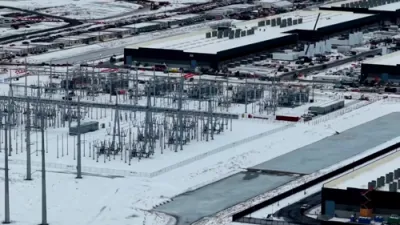
Johnson called for a measured, local approach rather than nationwide bans on data center development. He pointed to community agreements on energy rates and resource use, similar to arrangements already in place in Louisiana, as a practical model. By allowing projects to move forward under negotiated local terms, he suggested the United States can expand the infrastructure needed for AI leadership without ignoring community concerns. The Speaker framed data centers as essential building blocks in the broader technological contest with China.
The comments reflect growing Republican emphasis on maintaining American primacy in artificial intelligence and advanced computing. Johnson portrayed the competition as a national security issue rather than a purely commercial one. He argued that losing the AI race would carry serious consequences for the country’s future strength and safety. At the same time, his preference for localized agreements shows an attempt to balance rapid technological progress with practical considerations on the ground.
Critics in online replies pushed back, arguing that domestic needs such as housing and healthcare should take priority over large-scale AI infrastructure. Johnson’s position, however, centers on the strategic risk of ceding ground to China. By rejecting broad moratoriums and highlighting the dangers of falling behind, the Speaker placed the AI competition at the forefront of the policy debate. His message underscores a clear priority: America must stay ahead in the technologies that will shape the coming decades.