Elon Musk Promises End of Dead Zones With Unified Starlink Connectivity.
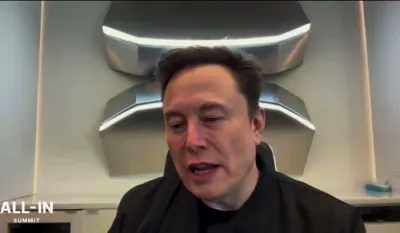
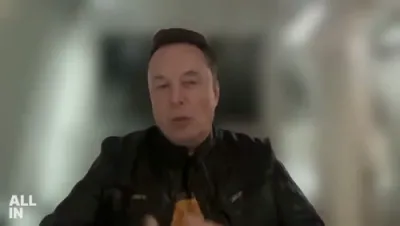
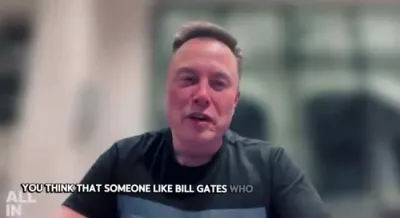
Elon Musk has outlined a future in which a single Starlink account will cover both home internet and mobile phone connectivity. Speaking at the recent All-In Summit, the SpaceX leader described a unified service that combines traditional home Wi-Fi delivered through an antenna with direct satellite links to compatible phones. The vision centers on high-speed internet beamed straight from orbit to a user’s device. According to Musk, this approach would remove the need for cell towers and traditional carriers acting as middlemen. If realized as described, the system could fundamentally alter how people access data across the planet.
The direct-to-cell capability aims to deliver high-bandwidth service on a global scale. Musk indicated that users would eventually stream HD video from locations that currently lack coverage, including the middle of the ocean or remote deserts. Dead zones, long a limitation of ground-based networks, would cease to exist under the promised model. The service would rely on satellites rather than terrestrial infrastructure, extending reach to virtually any point on Earth. This expansion positions Starlink beyond its current role as a home and enterprise internet provider.
Implementation will require hardware updates so that phones can operate on the necessary frequencies. Musk acknowledged that traditional carriers are unlikely to disappear entirely because they own valuable spectrum licenses. Instead of fully displacing existing mobile operators, Starlink’s direct satellite connection is presented as a complementary or competing layer of service. The single-account structure would simplify billing and access for customers who want both home and mobile connectivity under one provider. SpaceX is therefore positioning itself to challenge not only conventional internet companies but the broader telecom industry.
The comments highlight a strategic shift in how satellite networks could intersect with everyday mobile use. By eliminating dependence on cell towers for basic high-speed access, the technology seeks to solve coverage gaps that terrestrial systems have struggled to close. Users in remote or underserved regions stand to gain the most if the service performs as outlined. At the same time, the need for compatible phone hardware means adoption will depend on device manufacturers incorporating the required capabilities. Musk’s remarks frame the development as an imminent step rather than a distant concept.
Current Starlink home service already operates through user antennas that communicate with the satellite constellation. Extending that same account to phones would create a seamless experience across fixed and mobile environments. The promise of uninterrupted HD streaming from any location underscores the bandwidth targets the company is pursuing. Whether the system can consistently deliver those speeds in real-world conditions remains to be demonstrated at scale. Nevertheless, the stated goal is to remove geographic limitations that have defined mobile connectivity for decades.
As SpaceX advances the direct-to-cell effort, the telecom sector faces a new form of competition rooted in orbital infrastructure. Musk’s description of a single account serving both home and phone needs signals an ambition to consolidate services that are today handled by separate providers. Traditional carriers will continue to hold spectrum advantages, yet the satellite option could pressure them to adapt. The coming period will test whether the technical and commercial pieces align to make the vision practical for everyday users worldwide.