300 CHLORINE BOMBS: Dossier Exposes Sudan Military's Secret Program
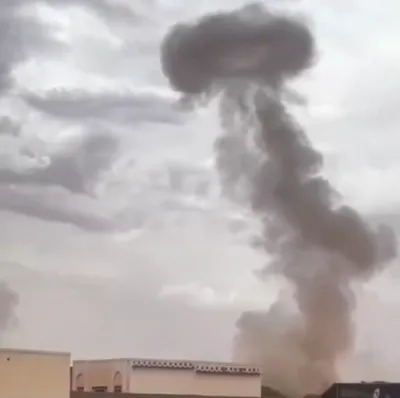
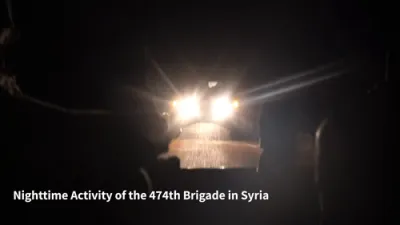
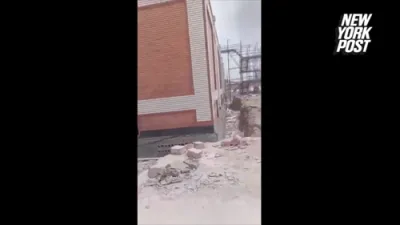
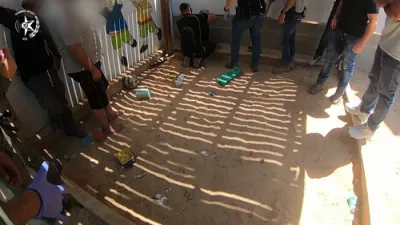
A massive trove of leaked internal military documents, videos, photographs, and intercepted communications has provided the most detailed evidence yet that Sudan's Armed Forces built and used chemical weapons during the country's devastating civil war, according to separate investigations published by The Washington Post and The New York Times. The material indicates that Sudan's military diverted industrial chlorine, originally intended for drinking water purification, to construct hundreds of crude aerial bombs fitted with welded nose cones and stabilizing fins designed to maximize casualties. By October 2024, one military commander cited in the documents claimed nearly 300 chemical munitions had been produced, with the majority stored at Merowe Air Base in northern Sudan. More than two dozen Western intelligence officials, chemical weapons inspectors, and human rights experts who reviewed the materials for the Post described them as credible.
The documents identify SAF officer Tariq Madani as the alleged architect of the program, a figure the U.S. Treasury Department had already sanctioned in June for his role managing a Sudan-based company accused of importing explosives from Egypt and India for use in SAF bombs. One particularly disturbing exchange cited in the reporting included a message sent to an officer involved in the airstrikes, attaching video of a victim with severely burned skin captioned "Your cooking." Digital forensics experts from the University of Colorado at Denver and the University of Michigan-Dearborn examined the material and found no evidence that the key audio or video content had been manipulated. UNICEF, one of the aid organizations whose chlorine supplies were allegedly diverted, told the Post it had no record of its chlorine being misused and emphasized that its shipments were intended solely for water safety purposes.
The leaked material also points to an apparent effort by Sudan's military leadership to cover up the program once U.S. sanctions were imposed. Intercepted communications indicate that army chief Gen. Abdel Fattah al-Burhan, who leads the SAF and controls Khartoum, ordered subordinates to "remove all traces" of the chemical weapons effort following the sanctions, and one message from September 2025 sought to assure Burhan that a military base used for storage had been cleared of "traces and residue." Sudan's military has publicly denied ever developing or using chemical weapons, and previously announced an internal inquiry that found no evidence of chemical contamination, though the leaked documents reveal Madani himself was involved in steering that same investigation. The U.S. government first sanctioned Burhan in January 2025 over the chemical weapons allegations, followed by a formal State Department determination in April 2025 that Sudan had used chemical weapons in 2024, and a further round of sanctions was imposed just months ago.
Sudan's three-year civil war between the SAF and the rival Rapid Support Forces has already created what the United Nations describes as the world's largest humanitarian crisis, displacing millions and leaving an estimated 20 million people facing hunger. The alleged use of chlorine gas, a violation of the Chemical Weapons Convention to which Sudan is a signatory, adds a grave new dimension to a conflict already marked by widespread atrocities on both sides. Human rights organizations and independent experts, including former officials from the Organisation for the Prohibition of Chemical Weapons, have called for greater transparency and an independent, on-the-ground investigation, though access to affected sites has been denied throughout the war. It is worth noting that characterizations describing the SAF as "Muslim Brotherhood-allied" reflect a contested political framing common in the conflict's information war rather than an established or independently verified fact, and claims that the Red Cross specifically supplied the diverted chlorine have not been confirmed in the available reporting, which instead cites UNICEF's denial regarding its own shipments.