12 HOURS TO LIFTOFF: JAXA Moves MMX Rocket Out Ahead Of Historic Mars Moon Mission
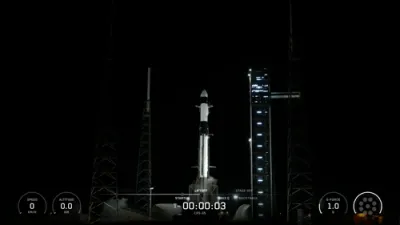
Japan’s race to Mars’ strangest moon just hit its final stretch, with the H3 rocket now sitting on the pad and only hours left on the clock. JAXA’s Tanegashima Space Center announced that H3 rocket No. 10, carrying the Martian Moons eXploration probe known as MMX, has finished its rollout from the Vehicle Assembly Building to Launch Pad 2, with about 12 hours to go before the scheduled liftoff at 04:41:03 JST on October 20, 2026. Aerial video shows the 63-meter giant being moved at a crawl on its mobile launcher, an almost ceremonial scene for a rocket that has to be flawless. This is the H3’s most powerful 24-configuration, with four solid boosters strapped to its sides, a muscle upgrade the roughly 4,500-kilogram spacecraft needs to escape Earth’s pull and start the long trip to Mars. The stakes are huge, because the mission was first meant to fly in 2024 and had to wait for the next Mars launch window, which opens only about once every 26 months.
MMX is Japan’s ambitious sample-return mission aimed at Phobos, the lumpy little moon that circles closer to Mars than any other known moon circles its planet. The plan is for the probe to reach Mars orbit in 2027, deploy a small rover built by French and German partners, scoop up at least 10 grams of surface material, and head home around 2030 to deliver the samples to Earth in 2031. The project is led by JAXA with support from NASA, France’s CNES, the German Aerospace Center and the European Space Agency, and it would be the first mission to bring back a sample from the Mars system. Scientists want to know whether Phobos and its sibling Deimos are captured asteroids or debris from a massive impact on Mars, and the sample could even contain grains of Mars itself. Launch is only the first of several risky stages, and as with any rocket, the date can still slip because of weather or last-minute technical checks, so the world will be watching closely.