Yair Golan Reverses Position on Joining Government With Chareidi Parties After Recording Surfaces
A recording of Israeli opposition politician Yair Golan sparked controversy in late May after he indicated that he would be willing to support a government including Chareidi parties, only to publicly reverse his position following the release of the footage.
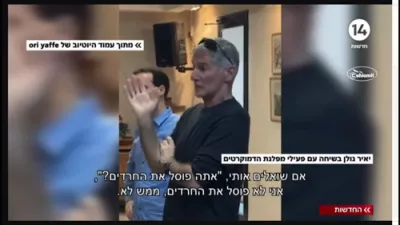
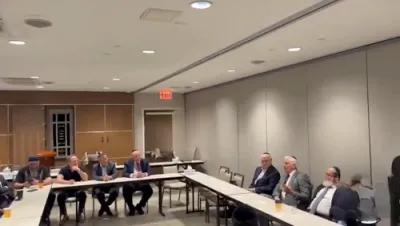
The recording, broadcast by Israel's Channel 14 on May 26, showed Golan, chairman of the Democrats party, speaking with party activists about the possibility of forming a government without Prime Minister Benjamin Netanyahu and his political allies.
During the discussion, Golan said he would not automatically rule out cooperation with Chareidi parties if their participation were necessary to establish an alternative coalition.
He explained that he would support such an arrangement provided that Netanyahu's Likud party and the parties led by Bezalel Smotrich and Itamar Ben Gvir were excluded.
Golan also addressed the contentious issue of military enlistment among Chareidim, criticizing political proposals that suggested large numbers of Chareidi men could be brought into military service immediately.
He described the process as complicated and argued that meaningful changes would require a gradual approach rather than immediate measures.
However, following the broadcast, Golan issued a public clarification on May 27, accusing Channel 14 of presenting his comments without their proper context.
He subsequently declared that the Chareidi parties would not be included in a future government led by his political camp, asserting that their positions on military service and other issues made them unacceptable coalition partners.
The conflicting statements prompted criticism and renewed discussion about the willingness of opposition leaders to cooperate with Chareidi representatives despite longstanding disagreements over religious and military-service policies.
The recording also highlighted broader divisions within the opposition over whether cooperation with Chareidi parties could be considered in future coalition negotiations.
Although the footage circulated in late May, the precise date on which Golan originally made the recorded remarks was not established in the published reports.