Video From Rav Dov Lando's Home Draws Attention Amid Dispute Over Yated Article
A newly released video from the home of HaRav Dov Lando has drawn attention amid an unusual dispute over an article published following the decision to replace veteran Degel HaTorah representatives Moshe Gafni and Uri Maklev.
The controversy developed after Yated Ne'eman published a sharply worded article addressing the turmoil surrounding the change in Degel HaTorah's Knesset representation. Alongside the article was an indication that the full text had been presented to the senior rabbinic leadership before publication.
That assertion was subsequently challenged by the home of HaRav Moshe Hillel Hirsch, which issued a brief clarification stating that the article published in Yated Ne'eman had not been presented to the Rosh Yeshiva.
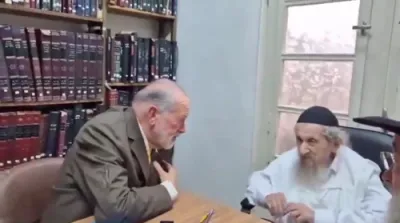
Attention then turned to footage released from the home of HaRav Dov Lando. According to reporting on the video, Rav Tuvia Lando, a grandson of Rav Dov Lando, is seen reviewing the document with his grandfather and telling him that it had also been transferred to Rav Hirsch. Rav Dov Lando is then seen approving publication without his name being attached to it.
Rav Tuvia Lando's involvement comes amid broader attention on the individuals serving as intermediaries between developments within Degel HaTorah and its senior rabbinic leadership. Current Haredi reporting identifies Rav Tuvia Lando, Rav Dovi Shapiro and Rav Aharon Hirsch as three figures involved in bringing information and possible names before the Gedolei Torah, while emphasizing that the decisions themselves rest with the Gedolei Torah.
The dispute follows the major shake-up announced earlier this week, when Rav Dov Lando informed longtime MKs Moshe Gafni and Uri Maklev that they would not continue as Degel HaTorah's representatives in the next Knesset, citing the need to refresh the party's representation.
Separate reporting has also placed Rav Tuvia Lando directly within the events surrounding the change, including a conversation between him and Gafni on the evening the decision was communicated.
The newly circulated footage therefore adds another element to the rapidly developing story: not merely the replacement of two longtime representatives, but a public disagreement over what was presented to the respective Torah leaders before a consequential Yated Ne'eman article went to print.