איראן געשטיצטע איראקער מיליציע סיגנאלירן שטיצע פאר אונטערדריקן איראן'ס פראטעסטן.
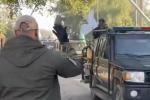
Iran-backed Iraqi militias are signaling their willingness to assist Tehran in confronting ongoing nationwide protests, echoing regime rhetoric that labels demonstrators as “Zionist agents.” The statements and imagery emerging from the region point to a dangerous escalation as Iran’s leadership seeks external muscle to reinforce internal repression.
Footage circulating online shows a convoy of armored vehicles and armed personnel flying green Shiite flags commonly associated with Iran-aligned Iraqi militias, including elements of Hashd al-Sha'bi. The convoy is reportedly moving into Iran, suggesting coordination with regime forces at a moment when protests have stretched security services and exposed cracks in internal control.
The demonstrations, which erupted in early January 2026, were triggered by worsening economic conditions, inflation, and long-standing political repression. Thousands of Iranians across multiple cities have taken to the streets, challenging the authority of the Islamic Republic despite mass arrests, internet restrictions, and forceful crowd dispersal. In response, Tehran has leaned on a familiar tactic: externalizing blame by portraying dissent as a foreign-backed conspiracy.
Labeling protesters as “Zionist” or foreign agents is a long-standing narrative used by the regime to delegitimize domestic opposition and justify harsh countermeasures. The militias’ language about “dealing” with protesters closely mirrors this framing, raising alarm about the potential importation of proxy forces historically used by Iran to project power beyond its borders.
The prospect of Iraqi militias operating inside Iran underscores the regime’s reliance on loyal, ideologically aligned armed groups when internal legitimacy falters. It also highlights the interconnected nature of Iran’s regional network, where militias function not only as tools of foreign policy but as insurance against internal unrest.
As protests continue, the involvement—or even the implied involvement—of foreign militias risks further inflaming tensions and deepening the regime’s isolation. For many observers, the episode reinforces concerns about Tehran’s readiness to escalate repression rather than address the grievances driving Iranians into the streets.
גאלערי
ווידעאס
