רוביא איבער מאדורא'ס ארעסט
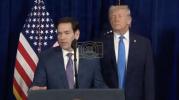
Secretary of State Marco Rubio defended the Trump administration’s decision to notify Congress only after the successful capture of Venezuelan leader Nicolás Maduro, stating that the mission was fundamentally a law enforcement action and that advance disclosure would have jeopardized both the operation and American lives.
Rubio explained that members of Congress were contacted immediately after the mission concluded, emphasizing that secrecy was not optional but essential. “At its core, this was an arrest of two indicted fugitives of American justice,” Rubio said, referring to Maduro and his wife, both wanted under U.S. indictments. He stressed that the operation’s sensitive nature made pre-notification impossible without risking leaks that could have triggered mission failure.
According to Rubio, the raid was monitored and prepared over several days and relied on precise timing and surprise. Any premature disclosure, even within official channels, could have alerted hostile actors and forced changes on the ground, potentially endangering U.S. personnel involved in the trigger-based operation. “It’s just not the kind of mission that you can pre-notify because it endangers the mission,” Rubio said.
The operation, carried out on January 3, 2026, marked one of the earliest and most consequential actions of President Donald Trump’s new term. Supporters within the Republican Party praised the move as decisive, disciplined, and legally grounded, arguing that the capture of an indicted foreign leader engaged in narcotics trafficking represents a clear enforcement of U.S. law rather than a conventional military intervention.
Democrats, however, criticized the administration’s approach, claiming the operation bypassed congressional norms and raised questions about international law. Rubio rejected those claims, countering that the United States acted within its rights to apprehend fugitives charged with serious crimes affecting American security and public safety.
By framing the mission as an arrest rather than an act of war, Rubio underscored the administration’s position that accountability does not end at national borders when criminal conduct directly targets the United States. He argued that the successful outcome validated the decision to prioritize operational security over advance political consultation.
Rubio’s remarks highlight a broader shift in how the administration approaches transnational crime and hostile regimes, signaling that future actions will be driven by results, legality, and the protection of American lives rather than procedural optics.
גאלערי
ווידעאס
