קריגס-סעקרעטאר העגסעט ווארנט איראן מיט א מעסעדזש פון אמעריקאנער פעסטקייט און שטארקייט.
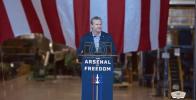
U.S. Secretary of War Pete Hegseth delivered a stark message to Tehran on February 2, 2026, invoking a notable moment from recent U.S. military operations to underscore American resolve against defiant regimes. Speaking publicly, Hegseth recalled Venezuelan leader Nicolás Maduro’s past taunt—“Here I am, come get me”—and pointed to the successful U.S. military capture of Maduro on January 3 as proof that Washington’s strategic patience should not be mistaken for weakness. The reference serves as an implicit warning to Iran amid escalating tensions over its nuclear program and its broader regional ambitions.
Hegseth’s remarks were part of a broader administration narrative linking deterrence and demonstrable strength. With the Pentagon prepared to act if Tehran refuses to negotiate over its nuclear enrichment efforts, Hegseth stressed that U.S. forces are “more than prepared” to execute any directive from President Trump aimed at preventing Iran from developing a nuclear weapons capability. The message reflects the revived “maximum pressure” doctrine that has guided U.S. policy toward Tehran, emphasizing both diplomatic engagement and credible military readiness should negotiations fail.
The symbolism of linking the Maduro operation to the Iran strategy is unmistakable. The successful extraction and capture of the Venezuelan strongman showcased United States military precision and operational reach, and Hegseth used that outcome to illustrate what he characterized as the consequences awaiting regimes that defy Washington’s security red lines. By drawing this parallel, he sent a clear signal that the United States views Iran’s nuclear ambitions through the same lens of unacceptable escalation.
This warning arrives against a backdrop of rising tensions in the region. The U.S. has bolstered its naval presence near Iran, and President Trump has indicated openness to talks, while maintaining that Iran must make concrete concessions or face alternative consequences. The juxtaposition of diplomatic overtures with public readiness for military action outlines a dual-track pressure strategy designed to compel Tehran to the negotiating table without immediate conflict.
Hegseth’s message positions the United States as a nation unwilling to tolerate existential threats from adversaries and ready to enforce its strategic objectives with decisive action. By invoking past U.S. military success and pairing it with current nuclear diplomacy dynamics, the secretary’s remarks reinforce a posture of strength that the administration says is essential for deterring aggression and safeguarding core American interests in a volatile global environment.
גאלערי
ווידעאס
