נתניהו מיט א ציוניסטישע מעסעדזש פאר האלאקאסט טאג נעווער עיגען
גאלערי
ווידעאס
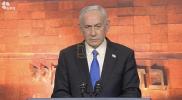
Israeli Prime Minister Benjamin Netanyahu delivered a forceful message during the official Yom HaShoah opening ceremony at Yad Vashem on April 13, 2026, declaring that Israel has upheld its commitment to ensure “never again” in the face of existential threats. Speaking at one of the nation’s most solemn commemorations, Netanyahu connected the historical lessons of the Holocaust to present-day national security decisions. His remarks emphasized the responsibility of the Jewish state to defend its people against emerging dangers. The speech was accompanied by Hebrew subtitles, reinforcing its significance for a domestic audience.
Netanyahu’s statement, “I promised there would be no more Holocaust — this year, we fulfilled that promise,” underscored his government’s position that recent actions have successfully protected Israel from severe threats. The framing reflects a broader doctrine in Israeli policy that prioritizes preemptive and decisive measures to neutralize risks before they escalate. Observers note that invoking Holocaust memory in this context is intended to highlight the gravity of current challenges. It also serves to reinforce national unity during a period of heightened tension.
The ceremony at Yad Vashem, Israel’s official Holocaust memorial, carries deep historical and emotional weight, making Netanyahu’s remarks particularly impactful. By linking past atrocities with current security policies, the Prime Minister sought to draw a clear line between remembrance and action. This approach aligns with longstanding Israeli narratives that emphasize vigilance and self-reliance. It also signals to both domestic and international audiences that Israel views its security posture as rooted in historical necessity.
Critics and supporters alike recognize that such statements are likely to resonate beyond Israel’s borders, shaping perceptions of the country’s strategic decisions. While supporters argue that the message reinforces Israel’s right to defend itself, critics may view the comparison as politically charged. Nonetheless, the timing and setting of the speech amplify its influence in ongoing geopolitical discourse. The remarks are expected to factor into broader discussions about Israel’s role and actions in the region.
Overall, Netanyahu’s address highlights how historical memory continues to inform modern statecraft in Israel. The invocation of “never again” remains a central pillar of the nation’s identity and policy framework. As regional tensions persist, such messaging underscores the seriousness with which Israeli leadership approaches national defense. The speech stands as a reminder of the enduring connection between history, security, and political leadership in shaping Israel’s path forward.
