אייס דעפארטמענט קויפט א ריזיגע נייע פעסילעטי
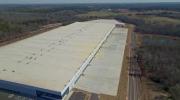
United States Immigration and Customs Enforcement has purchased a 1 million-square-foot warehouse in Social Circle, Georgia, for $128.6 million, marking a significant step in the agency’s broader infrastructure expansion tied to increased detention capacity nationwide. Department of Homeland Security planning documents indicate that the site will not remain a single-building operation; two additional structures are proposed, bringing the total footprint to approximately 2.3 million square feet.
Local officials estimate that once fully operational, the complex could house between 7,500 and 10,000 detainees, positioning it among the largest federal detention installations in the country. The acquisition is part of a wider multibillion-dollar effort to expand processing and detention capabilities across more than 20 municipalities, reflecting sustained federal emphasis on immigration enforcement logistics, centralized intake, and long-term holding capacity.
From an operational standpoint, large-scale facilities allow federal authorities to consolidate transportation, medical services, legal processing, and security functions into a single controlled environment. Proponents argue that purpose-built complexes improve efficiency, reduce reliance on short-term contracted space, and enhance oversight compared to dispersed smaller sites. Centralization also enables standardized compliance with federal detention protocols, including healthcare delivery, court access, and detainee classification systems.
However, the announcement has prompted infrastructure concerns at the local level. Social Circle officials have publicly questioned whether the existing municipal water system can support a facility of this scale, particularly given the projected population equivalent of a small city. Water demand would include not only daily residential usage but also sanitation, food service operations, medical facilities, and fire suppression systems. City leaders have indicated that upgrades to water supply and wastewater capacity may be required before the complex becomes fully operational.
The project also raises planning considerations related to transportation corridors, emergency services coverage, and utility load management. Large detention centers function as high-demand institutional users, requiring coordination between federal planners and local governments to address road access, staffing patterns, and public safety integration.
At the federal level, the expansion reflects a long-term strategy to increase bed space amid fluctuating migration flows and enforcement priorities. Officials maintain that modern facilities are designed to meet statutory detention standards while improving processing throughput and reducing overcrowding in existing centers. The Social Circle site, due to its size and logistical advantages, is expected to play a central role in that network once construction and retrofitting are completed.
As planning moves forward, negotiations between federal authorities and local officials will likely focus on infrastructure funding, utility upgrades, and service capacity to ensure the project can operate without straining municipal resources. The outcome will determine how quickly the facility can transition from acquisition to full operational status and how its impacts are managed at the community level.
גאלערי
ווידעאס
