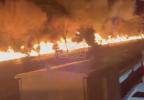
טעהראן גאסן איבערגעפילט מיט אויל נאך לופט אטאקעס.
גאלערי
ווידעאס
Massive fires erupted across parts of Tehran after coordinated U.S. and Israeli airstrikes struck key oil infrastructure in the Iranian capital, marking a significant escalation in the ongoing conflict now entering its ninth day. Reports and satellite imagery released on March 8, 2026, indicate that the strikes targeted the Shahran oil depots, one of the city’s major fuel storage facilities, triggering widespread fires and sending thick plumes of black smoke into the skyline.
Footage circulating online shows oil spreading through sections of Tehran’s streets and flowing into storm drains and sewer systems as flames continued to burn in the surrounding area. Witnesses reported that the intensity of the blaze caused fuel to spill across nearby roads, while smoke and ash blanketed surrounding neighborhoods. Some observers described oil-saturated rainfall falling over parts of the city as the fires burned through large volumes of fuel stored at the facility.
The strike represents the first confirmed targeting of Iranian oil infrastructure since the beginning of the 2026 conflict between Iran and the U.S.-Israel coalition. Military analysts note that energy infrastructure can play a strategic role in modern warfare, as oil depots serve not only civilian markets but also provide fuel supplies critical for military logistics, transportation networks, and operational readiness.
By targeting the Shahran depot, coalition forces appear to be expanding the scope of operations beyond missile sites and military installations to include strategic assets that support Iran’s ability to sustain prolonged conflict. Defense experts suggest that degrading these facilities could significantly disrupt fuel distribution within the capital and place additional strain on Iran’s wartime logistics.
In Tehran, emergency services have been working to contain the fires and prevent the flames from spreading to adjacent infrastructure. However, the scale of the blaze and the volume of burning fuel have complicated firefighting efforts, with smoke visible across large sections of the city. Authorities have also warned residents to avoid affected areas due to air quality concerns and the risk of additional explosions.
The incident highlights the growing intensity of the conflict as both sides continue to escalate pressure. While coalition forces frame the strikes as necessary to weaken Iran’s strategic capabilities, the targeting of energy infrastructure could have broader economic and environmental consequences for the region.
As operations continue, the fires in Tehran serve as a stark visual reminder of the conflict’s expanding reach. With the war now well underway, analysts warn that further strikes on strategic infrastructure could reshape both the battlefield and the regional balance of power in the weeks ahead.
