חאמאס פירער לויבט אויס די באזייטיגונג פון די אסאד רעזשים
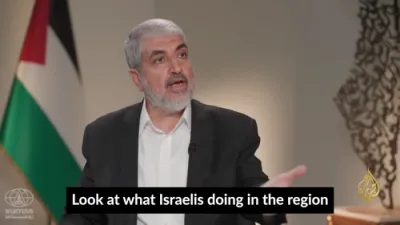
Senior Hamas leader Khaled Mashal publicly welcomed the overthrow of Syrian dictator Bashar al-Assad, declaring that the terror organization was “very happy” with the regime’s collapse. Mashal made the remarks in a December 2025 interview marking one year since Assad was removed from power, framing the event as an achievement for what he described as the Syrian people’s pursuit of freedom.
Assad’s regime officially fell on December 8, 2024, following an 11-day offensive led by Hay’at Tahrir al-Sham (HTS), ending more than five decades of Assad family rule in Syria. The collapse dramatically reshaped regional power dynamics and forced militant groups, state actors, and terror organizations to reassess long-standing alliances.
Mashal’s comments are notable given Hamas’s complicated history with Damascus. While Hamas once maintained close ties with the Assad regime, those relations fractured during the Syrian civil war in 2011, when Hamas distanced itself from Assad amid the regime’s violent crackdown on civilians. Since then, Hamas has attempted to reposition itself within a shifting Middle Eastern landscape.
Israeli analysts view Mashal’s statement as another example of Hamas attempting to capitalize politically on regional upheaval, despite its own record of authoritarian control, terror activity, and repression in Gaza. Israeli officials continue to emphasize that Hamas’s rhetoric about “freedom” stands in stark contrast to its actions, including the October 7 massacre and ongoing efforts to destabilize the region.
The fall of Assad has already triggered a realignment among militant groups and regional powers, raising new security challenges for Israel and its allies. Mashal’s remarks underscore how extremist organizations seek to exploit regime change narratives to legitimize themselves and expand influence, even as the region enters a volatile post-Assad era.