אראכטשי באשטעטיגט עפנטליך איבער 60% אוראניום
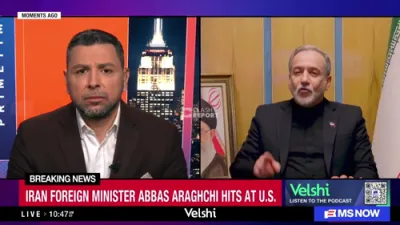
Iran’s Foreign Minister Abbas Araghchi publicly addressed his country’s nuclear program, acknowledging that Iran possesses 440 kilograms of uranium enriched to 60 percent—a level far beyond civilian power reactor needs and dangerously close to weapons-grade levels. In a recent statement, Araghchi emphasized that while such enrichment is technically sufficient for producing up to ten nuclear weapons, Iran is willing to consider diluting or downblending the material, framing this as a significant concession intended to ease international concerns.
Araghchi stated, “I never said that we are going to make bombs… We are ready to give it up, to dilute it, to downblend it. My point was that this concession is really big.” He criticized interpretations suggesting an imminent weapons program, attributing misunderstandings to either lack of knowledge or attempts to justify aggression against Iran.
Despite the stated offer, analysts and observers remain highly skeptical. Experts note that 60 percent enrichment serves no practical civilian purpose, as standard power reactors operate at only 3–5 percent enrichment, and even research reactors typically require far lower levels. Consequently, any proposal to downblend is viewed in many policy circles as a tactical move rather than a genuine de-escalation gesture. This skepticism is reinforced by Iran’s historical record of obfuscation, flip-flopping statements during past negotiations, and domestic political repression, which has fueled doubts about the regime’s transparency.
Public responses, particularly on social media platforms like X, have largely interpreted Araghchi’s remarks as further evidence of bad faith. Many observers contrast his latest statements with prior comments by Iranian officials, highlighting inconsistencies and framing the downblending offer as a negotiation tactic rather than a credible commitment. Critics argue that the timing of the announcement and the framing of the “concession” are consistent with a pattern of using rhetoric to delay or manipulate international responses.
The broader geopolitical context further complicates the situation. Iran’s nuclear program exists amid regional tensions involving Israel’s undeclared nuclear capabilities, ongoing U.S. policy toward Iran, and the strategic calculations of neighboring countries. Any claims of dilution or concessions are weighed against these dynamics, with regional actors largely assuming that Iran’s nuclear ambitions remain a significant security concern.
In summary, Araghchi’s public acknowledgment of Iran’s 60 percent enriched uranium stockpile and the offer to downblend it is being widely interpreted outside of Iran not as a genuine de-escalation, but as a continuation of a familiar negotiation strategy that combines partial disclosure with tactical ambiguity. Observers continue to view Iran’s nuclear activities through a lens of mistrust, questioning whether any concessions will be verifiable or substantive.