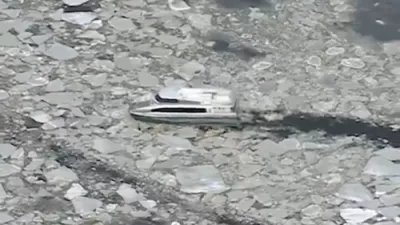
א צייט-פארלויף פון דער ארקטישער קעלט שיקט אייז-פלאקן אראפ דעם האדסאן טייך פארביי מאנהעטן.
A striking timelapse video captured over two days in late January 2026 shows ice floes drifting southward along the Hudson River toward Manhattan, offering a vivid reminder of winter’s grip on New York City. Framed by the Empire State Building and snow-dusted piers under heavy, overcast skies, the footage highlights slabs of ice slowly moving with the river’s current, creating a scene more commonly associated with far northern climates.
The icy conditions were triggered by a powerful Arctic blast that pushed temperatures below 10 degrees Fahrenheit, plunging the region into one of its coldest stretches of the winter season. While the visuals appear dramatic, partial ice coverage on the Hudson is not unusual during severe cold snaps. The river’s status as a tidal estuary, influenced by both freshwater flow and ocean salinity, typically prevents it from freezing solid even during extreme weather.
According to long-established observations of the Hudson’s winter behavior, strong currents and saltwater intrusion help keep navigation channels open, allowing maritime traffic to continue despite surface ice. The drifting floes seen in the video reflect surface freezing rather than a full lockup of the river, a phenomenon that has historically occurred only during exceptionally prolonged and intense cold periods.
The timelapse has drawn widespread attention not only for its visual appeal but also as a reminder of how quickly Arctic air masses can transform familiar urban landscapes. As winter continues, the scene underscores both the resilience of New York City’s infrastructure and the enduring influence of natural forces on one of the nation’s most iconic waterways.