צה"ל לופט-אטאקע עלימינירט מיליטאנט נעבן עזה באפער.
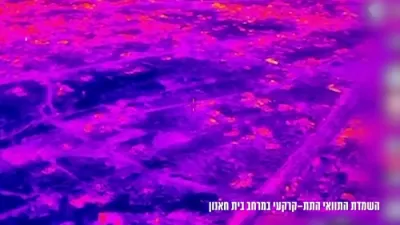
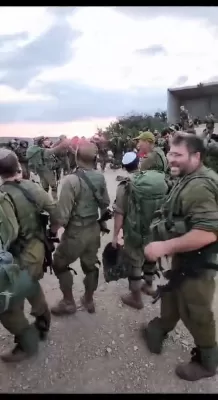
Israeli Golani Brigade forces operating in southern Gaza identified and neutralized a militant who crossed a designated security buffer and advanced toward their position, according to official military accounts. The individual was detected through thermal surveillance systems, which indicated movement consistent with a potential attack profile and prompted an immediate call for a precision airstrike.
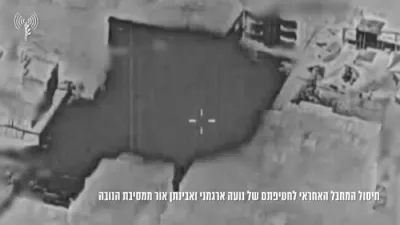
Footage released from the operation shows a heat signature approaching the defensive line before a controlled aerial munition struck the target area. Israeli officials state that the use of real-time drone guidance enabled accurate engagement while limiting the risk of collateral damage in a complex battlefield environment. The incident illustrates the integration of ground forces, aerial surveillance, and rapid strike capabilities that form the core of Israel’s current operational doctrine in Gaza.
The “yellow line” referenced by the military functions as a tactical boundary intended to provide early warning and defensive depth for troops deployed in forward positions. Any unauthorized crossing of this line is treated as a potential hostile act, particularly in areas where militants have previously attempted infiltration, ambushes, or the emplacement of explosive devices. Commanders emphasize that rapid response protocols are designed to protect soldiers from close-range attacks while maintaining controlled rules of engagement.
Thermal imaging and unmanned aerial systems have become central to detecting threats in environments where visibility is limited and adversaries rely on concealment. By identifying movement patterns and heat signatures, these tools allow forces to assess intent and respond before an individual reaches effective attack range. The resulting strike, according to Israeli statements, was calibrated to target a single combatant without broader area effects.
The operation reflects a broader emphasis on force protection and precision targeting amid ongoing hostilities. Israeli officials argue that such measures reduce the likelihood of wider engagements and help contain confrontations to clearly defined threat scenarios. At the same time, the reliance on layered surveillance and rapid air support underscores the technological dimension of modern urban warfare, where decisions are often made in compressed timeframes based on real-time intelligence.
As ground operations continue in southern Gaza, the use of defined security zones, remote sensing, and drone-guided munitions is expected to remain a central component of Israeli tactics. The approach is intended to mitigate risks to personnel while maintaining operational pressure on militant elements operating in close proximity to Israeli forces.