GAME-CHANGER: Israel's ROCKS Missile Lets Jets Strike Beyond Enemy Radar Reach
Gallery
Videos
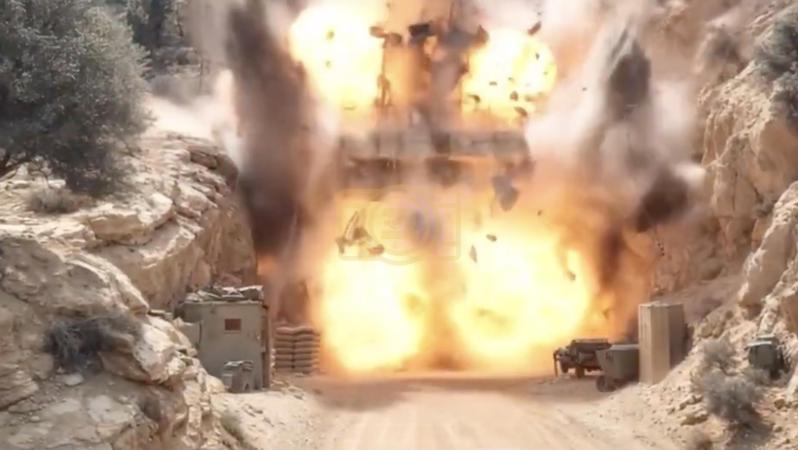
Israel’s ROCKS air-launched ballistic missile is emerging as a significant development in modern air combat capabilities. Built by Rafael, the weapon combines advanced AI scene-matching technology with supersonic speeds to give fighter jets a new way to engage heavily defended targets. The system is designed to allow aircraft to launch from positions well outside the reach of enemy radar networks. This approach reduces the exposure of pilots and platforms to sophisticated air defenses. Military observers describe the missile as part of a broader evolution in how long-range precision strikes are planned and executed.
The core advantage of ROCKS lies in its ability to operate from extended standoff distances. By remaining beyond typical radar envelopes, launching aircraft can avoid the most dangerous layers of integrated air defense systems. Once released, the missile relies on its guidance features to locate and engage the intended target. The integration of AI scene-matching is intended to improve accuracy even in complex or contested environments. These characteristics collectively aim to increase the effectiveness of air operations against well-protected assets.
Defense analysts note that weapons of this type are influencing current thinking about strike doctrine. Traditional approaches often required aircraft to penetrate deeper into hostile airspace, raising the risk of losses. Systems that enable attacks from safer distances change the risk calculation for mission planners. They also complicate the defensive challenge for any force seeking to protect high-value sites. The result is a shift toward greater emphasis on standoff capabilities and reduced reliance on close-range engagements.
Rafael’s development of ROCKS reflects ongoing investment in advanced munitions that pair speed with sophisticated targeting. Supersonic performance shortens the time between launch and impact, limiting the window for defensive responses. When combined with AI-assisted scene-matching, the missile is positioned to maintain effectiveness against targets that might otherwise be difficult to strike reliably. These attributes make it relevant not only for current conflicts but also for future planning scenarios involving dense air defense networks.
The appearance of such systems is prompting air forces and defense establishments to reassess both offensive and defensive concepts. For operators, the ability to hold defended targets at risk from long range expands the set of viable mission options. For potential adversaries, it raises the cost and complexity of protecting critical infrastructure. This dynamic is contributing to wider discussions about the balance between penetration tactics and standoff strike methods in modern warfare.
Overall, the ROCKS missile represents a notable step in the continuing refinement of air-launched precision weapons. By fusing AI guidance with high speed and extended reach, it offers fighter aircraft a means to engage protected targets while minimizing exposure to radar-guided threats. As air forces adapt to increasingly sophisticated defensive environments, capabilities of this kind are likely to play a larger role in shaping operational doctrine and force design decisions in the years ahead.