SIMULATION OF HIMALAYAN HORROR: Glacier Collapse Unleashes Deadly Flood, Hundreds Missing
Gallery
Videos
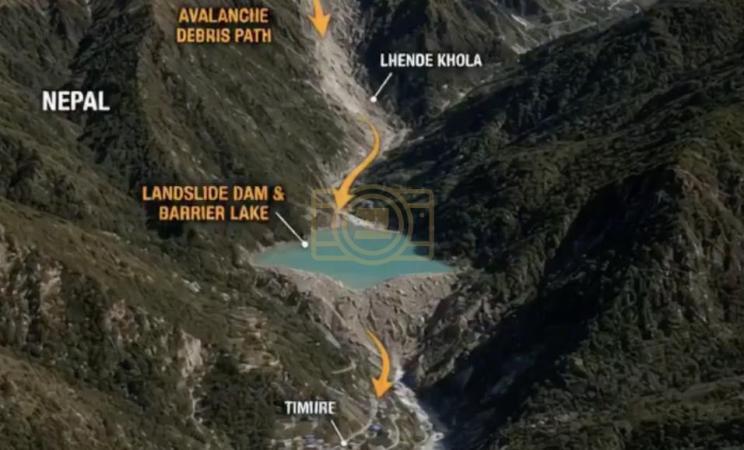
A chilling simulation now circulating online recreates the terrifying sequence of events behind Nepal's devastating flood disaster, and the science backing it up is just as alarming as the footage itself. According to Nepali officials, a massive section of Himalayan glacier broke away from a slope roughly 5,200 meters up and plunged some 1,200 meters down the mountainside, sending a violent mixture of ice, rock, and soil crashing into the Lhende Khola on August 26. The impact was so powerful it registered as a seismic event, initially mistaken for a magnitude 4.4 earthquake before experts reclassified it. The debris didn't just crash through the valley; it temporarily dammed the river, creating a makeshift lake that built up pressure until it violently burst.
When that natural dam gave way, the result was catastrophic. A massive surge of water, ice, and rock roared downstream into the Bhote Koshi and Trishuli rivers, sweeping away homes, roads, bridges, and hydropower infrastructure along the way. The flood wave moved with terrifying speed, and water levels in some stretches of the Trishuli reportedly rose several meters within just half an hour, giving residents almost no time to react. Communities across the Nepal-Tibet border region bore the brunt of the destruction, with hundreds confirmed dead and over a thousand people still listed as missing as search efforts continue. Entire settlements were left buried in mud and debris, and access to some of the hardest-hit areas remains extremely difficult for rescue teams.
What makes this disaster even more unsettling is how scientists pieced together what actually happened. Satellite imagery and analysis from the U.S. Geological Survey, along with independent geologists, confirmed that the seismic signal was caused by the glacier collapse itself rather than an earthquake triggering it, ruling out the initial theory circulating in the disaster's early hours. This distinction matters because it points directly to a growing and dangerous pattern in the region: rapid glacier melt driven by rising temperatures is making these sudden, catastrophic outburst floods more frequent across the Himalayas. Experts studying the area note that this is not an isolated incident either, as this same river system has now flooded more than once in barely over a year.
The broader implication here is sobering for the millions of people living in the shadow of the Himalayas. As warming continues to destabilize glacial ice at high elevations, communities downstream face a growing risk of sudden, unpredictable flooding events that can strike without warning and without a drop of rain falling. Nepal's disaster has become a stark real-world example of a threat that scientists have been warning about for years, one where the danger isn't a storm on the horizon but the mountain itself giving way. For the families searching for missing loved ones and the villages left in ruins, this glacier collapse is a devastating reminder of how quickly a warming climate can turn a remote mountainside into a deadly force.