RUBIO DEFENDS TRUMP'S PUTIN AND XI MEETINGS: Secretary Says Refusing Diplomacy Is 'Absurd' and 'Dangerous'
Gallery
Videos
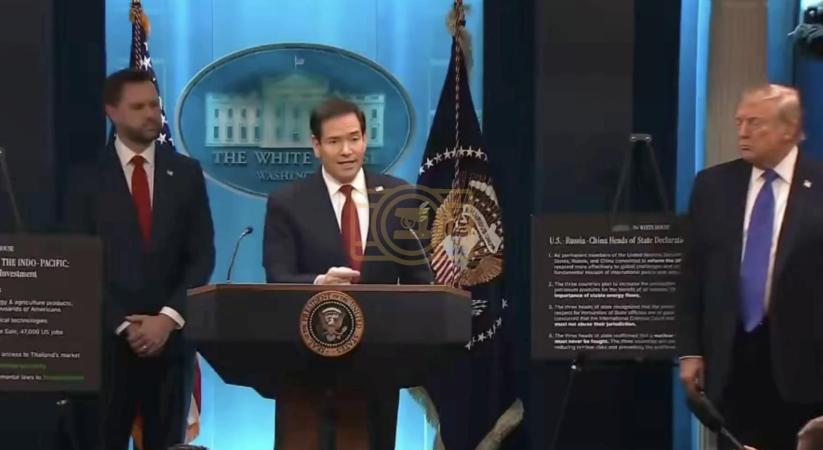
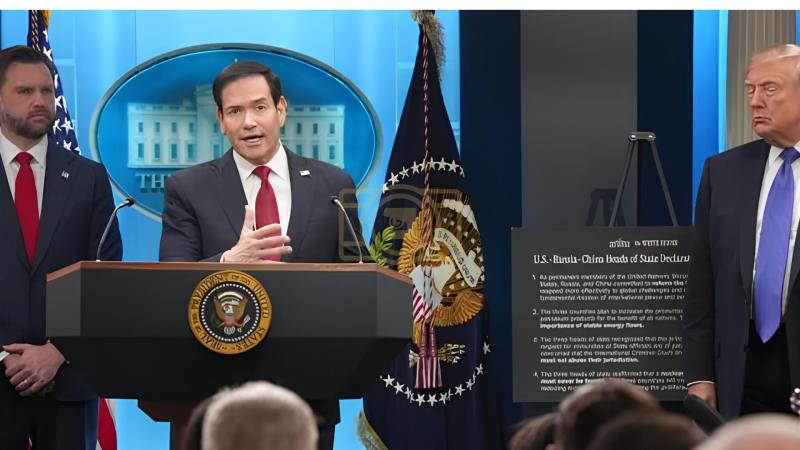
Secretary of State Marco Rubio has forcefully defended President Donald Trump's meetings with Russian President Vladimir Putin and Chinese President Xi Jinping, arguing that diplomatic engagement with the world's most powerful nuclear nations is essential to international security. Responding to criticism over Trump's recent trilateral meeting with the two leaders, Rubio emphasized that the United States, Russia and China collectively possess the overwhelming majority of the world's nuclear weapons. "The idea that these three leaders should not engage on a regular basis is not just absurd, it's dangerous," Rubio declared during a White House press conference on November 20. He argued that maintaining direct communication between the leaders is critical to preventing misunderstandings, negotiating agreements and reducing the possibility of a devastating nuclear confrontation. Rubio said productive diplomacy requires an environment in which leaders can communicate openly, insisting that positive relationships at the highest level can create opportunities for concrete agreements. His remarks came after Trump participated in a historic trilateral summit with Putin and Xi in Shenzhen, China, where the leaders discussed nuclear risks and international security.
Rubio further argued that diplomatic engagement should not be viewed as a concession to America's adversaries, but rather as a necessary instrument for protecting American interests and global stability. The secretary said the ability of the three leaders to communicate could help advance negotiations on issues ranging from nuclear weapons to the war in Ukraine and broader geopolitical tensions. The summit reportedly included discussions about reducing nuclear risks and preventing the proliferation of weapons, with the leaders affirming that nuclear war must never be fought. Trump's willingness to meet directly with Putin and Xi has nevertheless drawn criticism from opponents who question the diplomatic benefits of engaging leaders whose governments remain in conflict with Washington and its allies. Rubio dismissed the notion that refusing to engage would strengthen America's position, arguing that meaningful agreements cannot be achieved without direct communication. His defense underscores the administration's approach that even an imperfect diplomatic outcome could be preferable to escalating tensions between nuclear powers, where the consequences of a military confrontation could be catastrophic.