TRUMP ECONOMY: President Trump Warns 'We Don't Need Canada' While Slapping 50% Duties on Cars and Steel.
Gallery
Videos
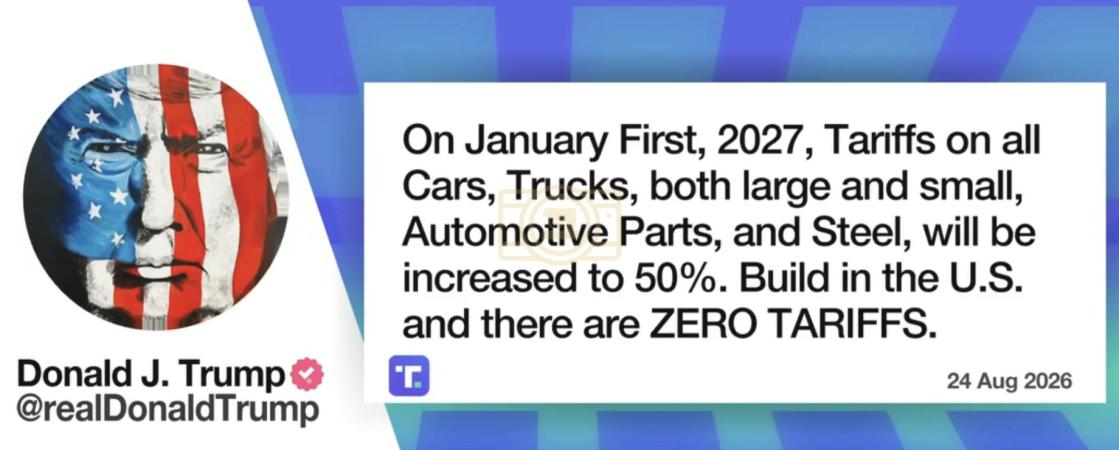
President Trump has declared that Canada will no longer be treated like a U.S. state, marking a sharp shift in how the administration views the northern neighbor. In a strongly worded statement, Trump accused Canada of feeling entitled while insisting that the United States does not need Canada and that the opposite is true. He announced that tariffs on all cars, trucks of every size, automotive parts, and steel will rise to 50 percent beginning January 1, 2027. The message leaves little doubt that the president is prepared to apply maximum pressure on trade.
Trump’s language frames the relationship as one of imbalance and dependency. He asserted that Canada relies far more heavily on the American market than the United States relies on Canada. By stripping away the notion of special or state-like treatment, the president is signaling that previous preferences and softer approaches are over. The 50 percent tariff rate on vehicles, parts, and steel is presented as the concrete policy consequence of that change in posture.
The January 2027 start date gives manufacturers and exporters a clear timeline to adjust. Companies that produce cars, trucks, automotive components, or steel in Canada will face the steep new duty unless they shift production into the United States. Trump’s statement positions the tariffs as both a penalty for past behavior and an incentive to relocate manufacturing. The breadth of the product list covers core industrial sectors that form a large share of cross-border commerce.
Supporters of the approach see the declaration as a long-overdue assertion of American leverage. Critics are likely to warn of higher costs for U.S. consumers and disruption to tightly linked supply chains. Trump himself shows no sign of softening the message, describing Canada’s stance as entitled and the United States as the indispensable partner. The phrase “we don’t need Canada, they need us” captures the zero-sum tone of the announcement.
The statement arrives as part of a broader pattern of hard-line trade rhetoric from the administration. By combining the symbolic rejection of special status with a specific and severe tariff schedule, Trump is attempting to reset expectations on both sides of the border. Canadian officials and industries now face a firm deadline and a clear choice: absorb the 50 percent duties or move production south. The coming months will test how both governments and businesses respond to the new reality Trump has outlined.