NETANYAHU IN GAZA: Israel Controls 60% Of Strip, Will Remain Along Yellow Line Until Hamas Is Disarmed

Gallery
Videos
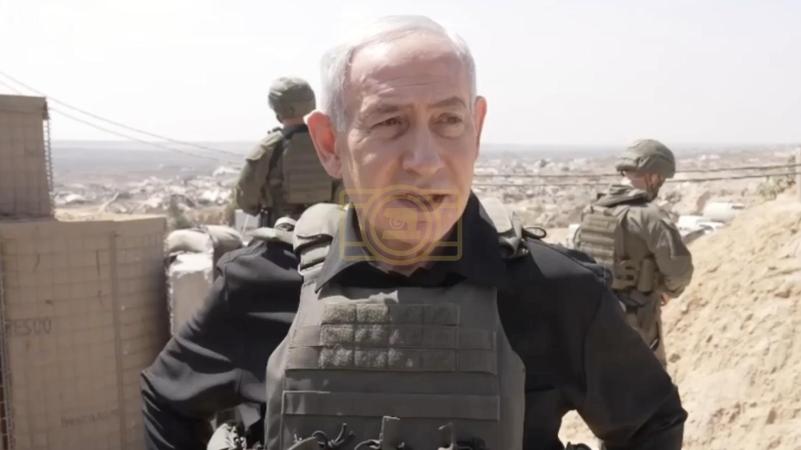
Prime Minister Benjamin Netanyahu made a rare visit to an IDF outpost inside the Gaza Strip and delivered a clear message about Israel’s current military position. He stated that Israeli forces now control roughly 60 percent of the territory and intend to remain along what he called the Yellow Line. Netanyahu emphasized that this presence will continue until Hamas is completely disarmed and Gaza is fully demilitarized. The remarks came as he stood in an area under Israeli control, underscoring the scale of the ground gains achieved so far. He framed the operation as unfinished business that must be brought to a decisive end.
During his comments at the outpost, Netanyahu directly addressed earlier political pressure to withdraw. He recalled that former defense minister Benny Gantz had pushed for Israel to leave Gaza, describing that approach as a form of surrender. Netanyahu said he was glad he had rejected that advice, pointing to the current reality of Israeli control over a majority of the Strip. He argued that holding the Yellow Line gives Israel the leverage needed to finish the campaign on its own terms. The prime minister presented the choice as one between lasting security and a premature exit that would leave threats intact.
Netanyahu stressed that significant work remains before the military objectives can be declared complete. He repeated that Israeli forces will stay in place and continue operations until Hamas no longer possesses the ability to rearm or threaten Israel. The goal of demilitarizing Gaza, he said, is non-negotiable and central to preventing future attacks. By linking territorial control to the disarmament demand, Netanyahu signaled that any future arrangements will be conditioned on the elimination of Hamas’s military capabilities. The visit itself served as a public demonstration that Israeli troops are operating deep inside the territory and intend to stay for as long as necessary.
The prime minister’s language left little room for ambiguity about the end state he seeks. He declared that Gaza will no longer pose a threat to Israel once the current mission is finished. That outcome, in his view, requires both the physical disarmament of Hamas and the broader demilitarization of the Strip. Netanyahu portrayed the Yellow Line as a temporary but essential holding position from which these goals can still be pursued. The statement reinforced the government’s position that military pressure remains the primary tool for achieving long-term security.
Observers following the conflict will note that Netanyahu chose to deliver these remarks from inside Gaza rather than from a podium in Jerusalem. The setting allowed him to speak against the backdrop of actual territorial control and to reject earlier calls for withdrawal in the strongest terms. By quantifying Israeli control at 60 percent and tying continued presence to the disarmament of Hamas, he set a high bar for any future political or diplomatic discussions. The message was consistent with the government’s long-standing insistence that the war will end only when the stated military objectives have been met.
As Israeli forces maintain their positions along the Yellow Line, the practical meaning of Netanyahu’s words will be tested in the weeks and months ahead. The prime minister has made clear that partial gains are not enough and that the campaign will continue until Hamas is stripped of its weapons and Gaza is rendered incapable of posing a military threat. His visit and statement together project confidence in the current military reality while rejecting any suggestion of an early exit. For now, the policy remains one of holding ground and pressing forward until the conditions he outlined are fully realized.