NETANYAHU DEMANDS NATIONAL UNITY: Israeli Leader Says Toppling Iran's Ayatollah Regime Is Essential
Gallery
Videos
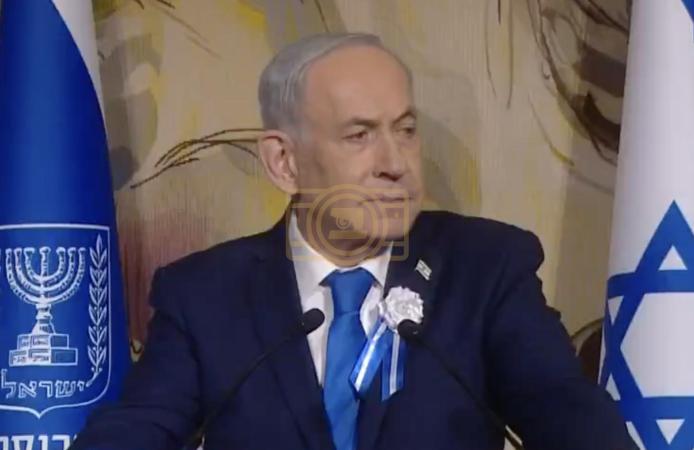
Israeli Prime Minister Benjamin Netanyahu used his address at the opening of the newly sworn-in Knesset on November 10 to call for a national unity government, arguing that Israel must stand together against what he described as an existential threat from Iran. Netanyahu warned that Tehran was working to revive its nuclear ambitions and declared that “the only way to permanently remove this existential threat is through the downfall of the Ayatollah regime.” He also cautioned that Israel could soon face international pressure to accept Iran as a nuclear power and tolerate a regime that openly threatens its destruction. Netanyahu argued that political divisions must be set aside so Israel can protect its security and preserve the military gains made against Iran and its regional proxies. His appeal comes after months of conflict and Israeli strikes targeting Iran’s nuclear and military infrastructure. He presented the proposed unity government as essential to preventing Tehran from rebuilding its capabilities and posing another major threat to Israel.
The political appeal comes at a complicated moment for Netanyahu, whose Likud-led bloc holds 53 seats in the 120-member Knesset following the October 27 election, short of the 61 required for a parliamentary majority. Opposition leader Gadi Eisenkot’s alliance holds 48 seats, while Arab-led parties control the remaining 19, creating several difficult possibilities for coalition negotiations. President Isaac Herzog has tasked Eisenkot with forming the next government, giving him 28 days, with a possible 14-day extension, to secure sufficient support. Netanyahu, meanwhile, has proposed a broad coalition involving Likud, his right-wing allies, ultra-Orthodox parties and other Zionist factions, while rejecting a government dependent on Arab parties. Eisenkot has indicated that any unity arrangement would have to be formed under his leadership and meet his stated political principles, leaving a major disagreement over who would lead such a government. With Iran’s nuclear ambitions at the center of Netanyahu’s appeal, the coming coalition negotiations will determine whether Israel’s political leaders can reach an agreement while facing continued regional security challenges.