SPACE RACE: Isaacman Declares US Will Reach Moon to Stay Despite China Setback
Gallery
Videos
NASA Administrator Jared Isaacman declared that the United States is not slowing down its lunar ambitions even as China postpones its latest mission. In a post on August 27, 2026, Isaacman noted China’s delay of the Chang’e-7 south pole probe while emphasizing that NASA continues full speed ahead. He pointed to America’s mandate, talent, resources, and advanced capabilities drawn from industry and international partners. The message framed the moment as one of clear American resolve rather than hesitation. Isaacman stressed that the United States already possesses the playbook needed for success.
The administrator rooted his confidence in historical achievement and present-day strength. “We have done it before. We will do it again,” he stated, recalling the Apollo program that first placed astronauts on the lunar surface. This time, he added, the goal is not a brief visit but a sustained presence. The commitment to stay on the Moon marks a shift from earlier exploration efforts toward long-term operations and infrastructure. Isaacman’s words position the current effort as both a continuation of past triumphs and a more ambitious next chapter.
China’s decision to delay Chang’e-7 stemmed from weather conditions and safety reviews, according to available reports. The postponement removes, at least temporarily, one element of competition at the lunar south pole, a region of high interest for future bases and resource studies. Isaacman used the moment to underscore that NASA’s timeline remains intact and that American plans do not depend on matching every Chinese schedule. The contrast between a delayed Chinese probe and steady US progress formed the core of his public message. It also served as a reminder of the broader rivalry for influence beyond Earth.
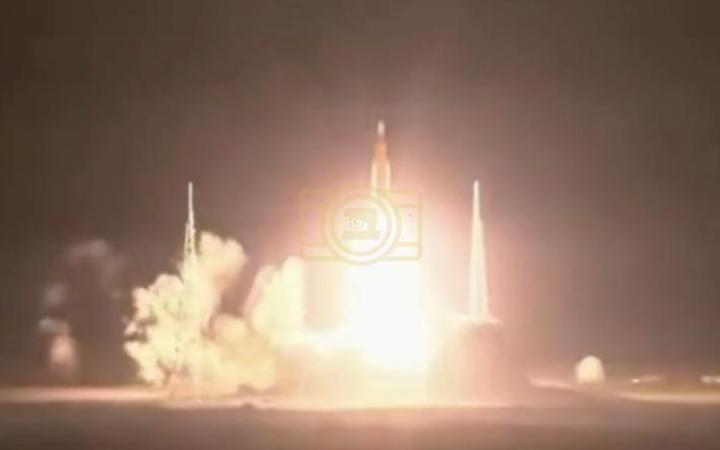
In a NewsNation interview accompanying the statement, Isaacman appeared alongside footage of NASA rocket launches and graphics illustrating the return of astronauts to the Moon. The visual presentation reinforced the narrative of technical readiness and national capability. Partnerships with American industry and allied nations were highlighted as essential sources of the advanced systems required for sustained lunar operations. These collaborations supply both hardware and expertise that expand what NASA can achieve. The combination of government direction and private-sector innovation is presented as a decisive advantage.
The larger context is a growing competition between the United States and China over lunar resources and the establishment of bases targeted for the early 2030s. Isaacman’s remarks assert that America holds the necessary elements—mandate, talent, resources, and experience—to lead in that contest. By declaring the intention to go to the Moon and remain there, he set a clear strategic objective that extends beyond flag-planting. The statement also signals to domestic and international audiences that temporary setbacks on the Chinese side will not alter US priorities. Momentum, in this view, remains firmly with the American program.
As preparations continue, the focus stays on turning the declared vision into operational reality. Isaacman’s confident tone seeks to rally support and maintain public and political backing for the sustained lunar effort. The acknowledgment of China’s delay serves less as celebration and more as contrast, highlighting consistency on the US side. Whether the early 2030s timeline holds will depend on continued funding, technical progress, and effective partnerships. For now, the NASA administrator has drawn a sharp line: America is not pausing, and this time the Moon is meant to become a lasting destination.