1,500 PACKAGES AN HOUR: China's RobotEra M7 Humanoids Now Sorting Packages at 10+ Logistics Centers, Reaching 1,500 Per Hour
Gallery
Videos
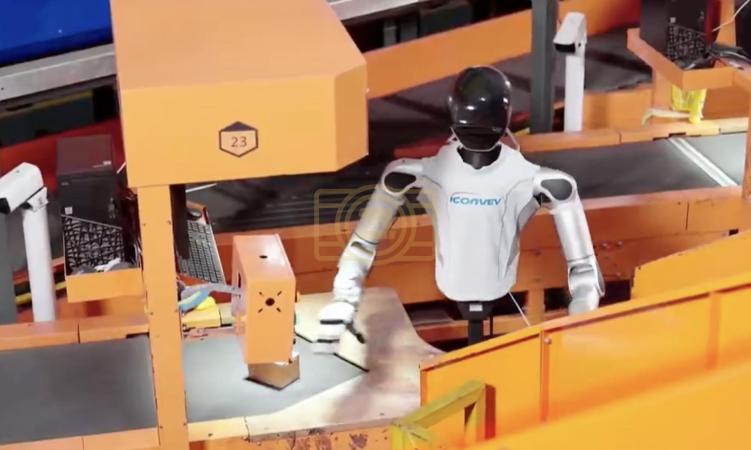
Humanoid robots are moving beyond laboratory demonstrations and into real-world warehouse operations, with RobotEra’s M7 machines now reportedly working across more than 10 logistics centers operated by China Post and SF Express. The robots are being used to sort parcels on active conveyor systems, including during China's massive November 11 (11.11) shopping festival, one of the country's busiest online shopping periods. According to RobotEra, the M7 initially achieved between 800 and 900 packages per hour under real warehouse conditions, falling short of its laboratory benchmark of 1,200. However, after collecting operational data from human sorting workers and using it to refine the robots' AI models, the company says peak throughput has climbed to 1,500 packages per hour. The machines are also designed to handle mixed parcel flows, including cardboard boxes, plastic delivery bags, and irregularly shaped packages. Video footage shows multiple fixed-base robotic units using articulated hands to pick up, scan, and place parcels as they move along warehouse conveyor systems.
The deployment highlights China's accelerating efforts to introduce humanoid robotics into commercial industries, particularly logistics, where repetitive sorting operations provide an opportunity to test automation at scale. Unlike conventional industrial robots designed for a single repetitive movement, humanoid systems are being developed to adapt to different objects and changing work conditions with greater flexibility. RobotEra's reported use of human worker data also illustrates how real-world operational experience can help improve robotic performance beyond controlled laboratory environments. Logistics companies stand to benefit from faster parcel processing, reduced dependence on repetitive manual tasks, and the potential for longer operating hours. However, the reported peak rate of 1,500 packages per hour does not necessarily represent sustained performance across every facility or operating shift. If these deployments continue expanding and demonstrate consistent results, humanoid robots could become an increasingly visible part of China's rapidly evolving logistics infrastructure.