Trump Administration Offers $2,600 for Voluntary Departure.
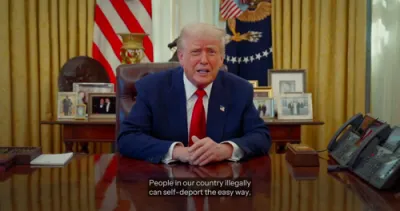
U.S. Customs and Border Protection (CBP) released a Valentine’s Day video on February 14, 2026, encouraging migrants to voluntarily depart the United States through a self-deportation program. The video paired footage of migrants boarding buses and planes with a romantic overlay of Elvis Presley’s “Can’t Help Falling in Love”, while promoting a $2,600 financial incentive for voluntary departure. Officials framed the message as a lighthearted approach to advance the administration’s broader immigration enforcement objectives.
The campaign aligns with the Trump administration’s 2026 immigration strategy, which seeks to increase voluntary departures and reduce the costs associated with forced removals. According to Department of Homeland Security estimates, processing a deportation through enforcement typically costs about $10,000 per individual, whereas incentivized self-deportation reduces the cost to approximately $2,600 per person. The program aims to encourage over 1 million voluntary departures annually, helping to streamline enforcement and improve efficiency across border and interior operations.
The Valentine’s Day initiative is part of a larger outreach effort by CBP to combine enforcement with incentive-based programs. By promoting voluntary compliance, officials hope to reduce confrontations, logistical burdens, and legal challenges associated with involuntary removals. The video has drawn attention for its unconventional combination of pop culture and policy messaging, highlighting the administration’s willingness to leverage media and creative messaging to achieve operational objectives.
CBP emphasizes that participation in the program is entirely voluntary and is designed to allow migrants to leave safely while receiving financial assistance to facilitate reintegration in their home countries. This approach reflects a strategic focus on combining deterrence with practical incentives to achieve immigration policy goals without escalating confrontations or resource expenditure.
The campaign has already circulated widely on social media and has sparked debate regarding tone, messaging, and enforcement priorities. Supporters praise its efficiency and innovative approach, while critics argue that it trivializes complex humanitarian and legal considerations. Regardless, the program underscores the administration’s ongoing commitment to using both incentives and enforcement tools to manage immigration flows effectively.