אמעריקאנער כוחות קאנפיסקירן סאנקציאנירט שיף נאכן עס נאכלויפן 8,000 מייל
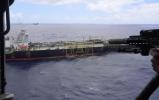
U.S. forces executed a long-range maritime interdiction operation culminating in the boarding and seizure of the oil tanker Bertha in the Indian Ocean, following an 8,000-mile tracking effort that began in the Caribbean. According to Pentagon statements, the vessel had been operating in violation of President Donald Trump’s established quarantine targeting sanctioned maritime actors and allegedly attempted to evade enforcement measures while transiting international waters.
The operation was conducted within the U.S. Indo-Pacific Command area of responsibility and involved a right-of-visit boarding carried out without resistance. MH-60R helicopters deployed from a U.S. Navy vessel inserted boarding teams onto the tanker, securing the ship and its crew without incident. Officials described the action as a lawful maritime interdiction consistent with sanctions enforcement authorities and international maritime procedures.
Defense authorities emphasized that the vessel had been linked to networks engaged in sanction-evasion activities associated with Venezuelan, Russian, and Iranian energy interests. The interdiction forms part of a broader 2026 enforcement campaign aimed at disrupting so-called shadow fleet operations—tankers that obscure ownership structures, manipulate tracking data, or conduct ship-to-ship transfers to circumvent global sanctions regimes. At least five such vessels have reportedly been seized or immobilized under the current initiative.
The Department of War framed the operation as evidence of unmatched American global reach, highlighting the ability to track, monitor, and intercept sanctioned actors across multiple theaters. Officials stressed that international waters do not provide immunity from lawful enforcement actions when vessels are engaged in illicit trade or sanctions violations. By projecting sustained maritime presence from the Caribbean through the Indo-Pacific, U.S. forces demonstrated extended endurance and cross-command coordination capabilities.
Maritime analysts note that shadow fleet interdictions require layered intelligence integration, including satellite surveillance, maritime domain awareness systems, financial tracking, and interagency cooperation. Successful boarding operations depend on precise timing, weather assessment, and rules-of-engagement compliance to avoid escalation while maintaining operational control.
Supporters of the enforcement campaign argue that sustained pressure on illicit oil transport networks reduces revenue streams that fund destabilizing activities and proxy operations. Critics caution that expanded interdictions in contested regions carry diplomatic sensitivities and underscore the importance of transparent legal justification under international maritime law.
The seizure of the Bertha underscores an evolving maritime strategy that blends sanctions enforcement with strategic signaling. By demonstrating the capacity to track and intercept sanctioned vessels across vast distances, U.S. forces aim to deter evasion efforts and reinforce the credibility of economic restrictions imposed by Washington. The message from defense officials is clear: sanctioned actors operating at sea should not assume that geography or distance will shield them from enforcement action.
גאלערי
ווידעאס
