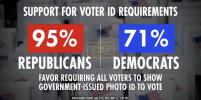
71% פון דעמאקראטן ווילן וויילער אידענטיפיקאציע קארטל, אבער שומער וויל עס נישט.
גאלערי
ווידעאס
Senate Minority Leader Chuck Schumer faced a public confrontation on MSNBC after being shown polling data indicating that 71% of Democrats support nationwide voter ID requirements. The exchange occurred during coverage of the SAVE America Act, legislation that would require proof of citizenship for voter registration across the United States.
The clip shows the host noting the high level of Democratic support for voter ID and asking Schumer, “71% of Democrats support this. Why do YOU not?” Schumer responded by labeling the measure “Jim Crow 2.0” and argued that Republicans would be unable to gain Democratic support in the Senate, asserting, “You will NOT get SINGLE Democrat in the Senate, Republicans!” His remarks drew sharp criticism from pro-SAVE Act commentators who highlighted the disconnect between public opinion and Schumer’s rhetorical stance.
The data cited comes from a February 2026 Pew poll, which found that 83% of Americans overall and 71% of Democrats specifically support some form of voter ID for registration. Proponents argue that requiring identification strengthens election security, prevents fraud, and maintains confidence in the voting process. Critics of Schumer’s position claim that his dismissal of the polling reflects political posturing rather than constituent preferences.
Opponents of nationwide voter ID laws, including Schumer, cite concerns that such measures can disproportionately affect minority communities and individuals with limited access to documentation, referencing historical practices in some Southern states. Nonetheless, the stark contrast between public opinion and Democratic leadership rhetoric has renewed calls among conservatives and SAVE Act supporters to push forward with the legislation and reconsider procedural hurdles such as the filibuster.
The MSNBC confrontation has amplified debate around the SAVE Act and voter ID, with advocates framing it as both a common-sense safeguard and a litmus test for lawmakers claiming to represent the will of their constituents. The exchange underscores the growing tension between national polling data and entrenched party positions on election integrity reforms.
