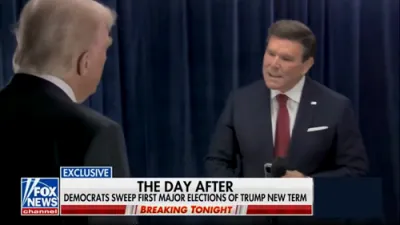
ברעט בייער קאנפראנטירט איראן'ס אויסערן מיניסטער איבער טיף באגראבענע נוקלעארע פאבריקן.
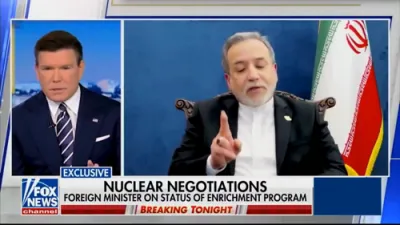
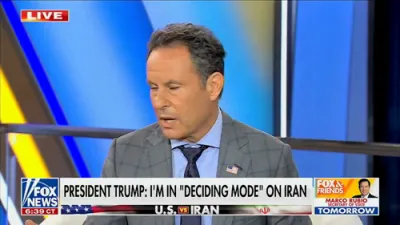
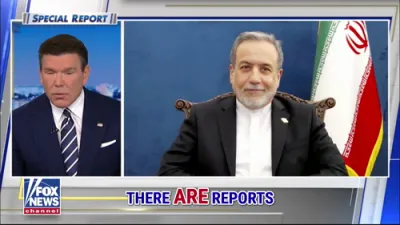
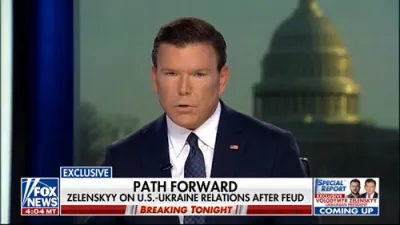
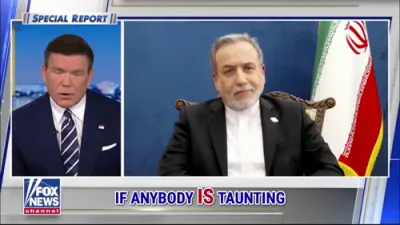
A tense and revealing exchange unfolded as veteran journalist Bret Baier directly challenged Iranian Foreign Minister Abbas Araghchi over Iran’s long-standing claim that its nuclear program is strictly peaceful. Baier cut to the core of the issue with a pointed observation: legitimate civilian nuclear programs are not typically buried a mile underground.
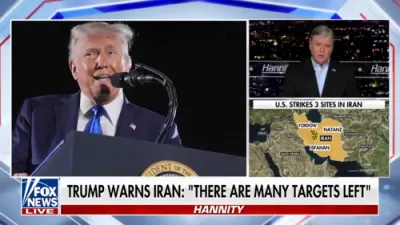
The remark referenced Iran’s heavily fortified nuclear sites, including Fordow, which international inspectors and intelligence assessments have long identified as being constructed deep beneath rock to withstand military strikes. Such design choices, Baier implied, raise serious doubts about Tehran’s insistence that its nuclear ambitions are purely for energy or research.
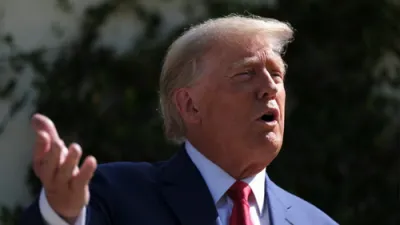
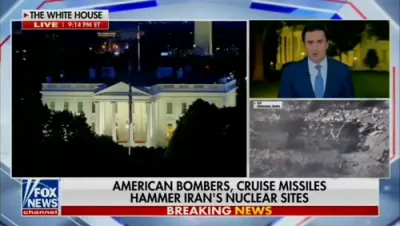
Rather than address the substance of the concern, Araghchi pivoted to political grievances, accusing President Donald Trump of opposing diplomacy. He cited U.S. strikes carried out in June 2025 during the Iran–Israel war, when President Trump authorized attacks on three Iranian nuclear facilities. Those strikes damaged key infrastructure but, according to U.S. intelligence assessments, did not fully stop Iran’s enrichment activities, which had already reached near weapons-grade levels.
Baier’s questioning underscored a central contradiction that has defined Iran’s nuclear posture for years: a government claiming peaceful intent while investing heavily in hardened, clandestine facilities designed to survive airstrikes. International Atomic Energy Agency reports have repeatedly noted these characteristics, fueling concern among U.S., Israeli, and allied security officials.
The exchange highlighted a broader reality confronting the international community. Diplomatic rhetoric alone cannot explain why a supposedly civilian nuclear program requires extreme concealment, advanced fortification, and enrichment levels far beyond what is needed for civilian power. President Trump’s decision to act militarily was framed by his administration as a response to precisely this gap between Iran’s words and its actions.
In pressing Araghchi on these facts, Baier reflected the skepticism shared by many policymakers and analysts who view Iran’s nuclear assurances as increasingly detached from observable reality. The interview served as a reminder that the debate over Iran’s nuclear program is not about tone or diplomacy alone, but about engineering choices, enrichment levels, and strategic intent.