פרעזידענט טראמפ זאגט אז עקספערטן זענען געווען ווראנג ווען אמעריקע פירסט ברענגט למעשה עקאנאמישע וואוקס.
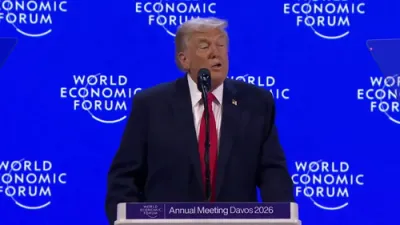
President Trump used his January 21, 2026, address at the World Economic Forum in Davos to directly challenge what he described as decades of failed economic orthodoxy embraced by Washington and European capitals. Speaking to a global audience of political and business leaders, Trump rejected the long-standing belief that Western economic growth depends on expanding government spending, mass migration, and unrestricted foreign imports.
“In recent decades, it became conventional wisdom in Washington, and European capitals that the only way to grow a modern Western economy was through ever-increasing government spending, unchecked mass migration and endless foreign imports,” Trump said. He noted that when he moved to dismantle that model, nearly all so-called experts warned his policies would trigger a global recession and runaway inflation. “We have proven them wrong,” the president declared.
Trump argued that his America First agenda has instead delivered strong economic performance, revitalized domestic industry, and restored national confidence. He pointed to the reopening of energy plants, aggressive deregulation, and a renewed focus on domestic production as evidence that economic growth can be achieved without surrendering sovereignty or relying on unsustainable fiscal expansion. According to Trump, these policies have strengthened supply chains, reduced strategic vulnerabilities, and created high-quality jobs at home.
The president contrasted U.S. outcomes with developments in Europe, where he criticized migration policies as destabilizing and unrecognizable compared to previous generations. Trump framed Europe’s struggles as a cautionary example of what happens when governments prioritize ideological commitments over national cohesion and economic realism. His remarks drew a clear line between American economic independence and what he portrayed as European policy drift.
Trump’s speech also reinforced his administration’s tariff-driven trade strategy, which has reshaped relations with allies and competitors alike. While critics argue the approach has heightened tensions—particularly around issues such as trade imbalances and U.S. strategic ambitions—Trump maintained that firm enforcement has corrected decades of unfair practices and forced long-overdue negotiations.
Addressing a forum traditionally aligned with globalist consensus, Trump positioned his administration as proof that alternative economic models can succeed. By rejecting expert pessimism and emphasizing tangible domestic results, the president framed America First not as a slogan, but as a governing philosophy that has reshaped economic outcomes and challenged assumptions long treated as unquestionable.