DANCING TO VICTORY: Yemeni Troops Celebrate as Houthi Ground Slips Away
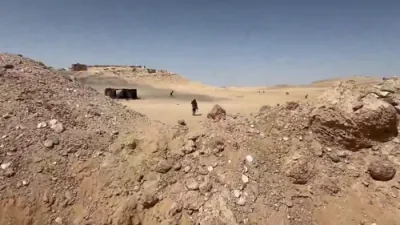
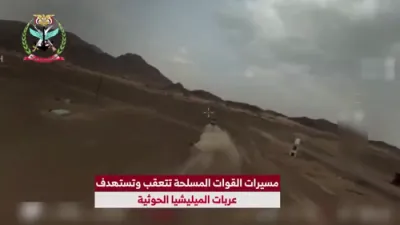
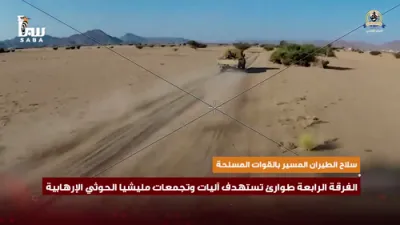
Footage circulating online shows Yemeni government troops breaking into spontaneous celebration, dancing, jumping, and waving their rifles in the open desert as they mark fresh territorial gains against the Iran-backed Houthis. The energetic scenes, filmed among soldiers in desert camouflage, capture a rare moment of jubilation in a conflict that has ground on for over a decade with little clear resolution. This celebratory mood isn't happening in a vacuum; it reflects a real and rapidly unfolding counteroffensive that government forces have launched across multiple provinces since early September. The mix of raw emotion and military momentum on display in the video speaks to just how significant these recent advances feel to the troops on the ground.
The most notable of these gains came in Hodeidah province, where Yemeni armed forces announced the complete liberation of the Hays district after driving out Houthi fighters who had held parts of its rural areas since the district's original liberation back in 2018. Government sources said troops recaptured territory around the Al-Barah junction, forcing Houthi fighters into a retreat that left dozens killed or wounded in the fighting. With Hays secured, forces reportedly began pushing simultaneously in three directions, north toward al-Jarrahi, east toward Jabal Ra's, and south into Taiz province, aiming to build on the momentum rather than pause to consolidate. Capturing al-Jarrahi in particular would carry major strategic weight, since it would open a path toward Houthi-held Hodeidah city itself and sever a key route connecting the province to Ibb and the Tihamah region.
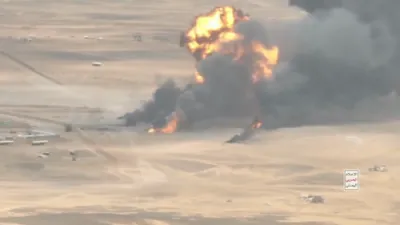
The celebrations extend well beyond Hodeidah, with government forces reporting simultaneous progress across Taiz, Al-Jawf, and al-Bayda as part of a broader, coordinated counteroffensive. In Taiz, troops claimed to have recaptured positions around Al-Kadha and Al-Barh while repelling Houthi attempts to infiltrate government-held areas. Further east in Al-Jawf, Yemeni forces launched a large-scale operation that reportedly captured the Houthi-held military camp of Labanat, with military spokesmen confirming fighters and equipment had been targeted at the site. Rashad al-Alimi, chairman of Yemen's Presidential Leadership Council, framed the momentum in sweeping terms, declaring that the military was capable of restoring full government control over the country and warning that Taiz "will not be a corridor" for Iran's influence in the region.
Still, the picture on the ground remains far more complicated than a single celebratory video might suggest. The Houthis continue to hold Yemen's capital, Sana'a, along with several other major cities, and had themselves launched an offensive near Taiz just days before the government's counteroffensive began, seeking to threaten the port city of Mokha and push toward the strategically vital Bab al-Mandeb Strait. Analysts tracking the conflict have cautioned that these latest gains, while real and meaningful, don't yet represent a decisive turning point in Yemen's broader civil war. More than 60 people, including civilians, were reportedly killed in Taiz alone in a single day of fighting, and the United Nations said nearly 1,800 families were displaced within just two days as the violence escalated. For the soldiers dancing in the sand, the moment may feel like victory, but the war they're celebrating is far from over.