FASTEST RUN: Humanoid Robot Races 100 Meters in 9.39 Seconds.
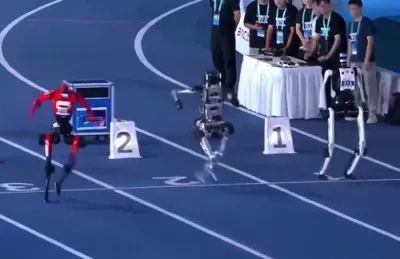
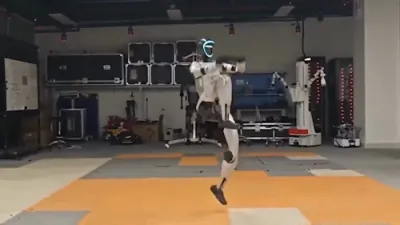
A Chinese humanoid robot has stunned spectators in Beijing by running 100 meters in 9.39 seconds, faster than Usain Bolt’s legendary 9.58-second men’s world record. Tiangong Ultra, developed by the Beijing Humanoid Robot Innovation Center, achieved the time during a preliminary heat at the second World Humanoid Robot Games. The result is a striking demonstration of how quickly robotic locomotion is advancing, even though Bolt’s record remains the official human world record.
Tiangong Ultra’s performance was particularly dramatic because it had fallen behind Honor’s Lightning early in the race before overtaking it near the finish. Lightning crossed in 9.47 seconds, also faster than Bolt’s human record, while reports said the robot had previously recorded a 9.32-second time during a test run. Tiangong’s latest performance also represents an enormous improvement from its 21.50-second winning time at last year’s inaugural games.
The footage, however, reveals a remarkable weakness alongside the incredible speed. After crossing the finish line, both robots struggled to stop cleanly, with Tiangong stumbling toward the side of the track while Lightning collapsed and was carried away. The spectacular crashes highlight the difference between achieving extraordinary peak speed on a controlled track and developing the balance, braking, coordination and reliability required for robots to operate safely in the real world.
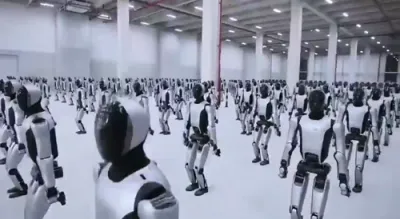
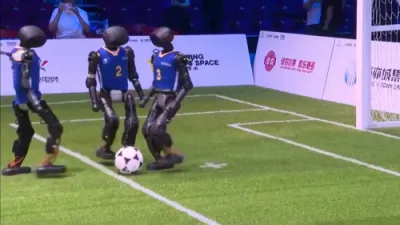
The sprint was only one part of a much larger showcase of humanoid robotics in Beijing. The five-day World Humanoid Robot Games feature more than 2,000 robots competing across 51 events, including running, soccer, table tennis and practical tasks designed to test machines in situations resembling factories, restaurants and other real-world environments. Researchers and industry leaders say those less glamorous challenges may ultimately be more important than headline-grabbing athletic records because they test whether robots can function autonomously outside controlled demonstrations.
For now, the 9.39-second run is best understood as a remarkable robotics milestone rather than evidence that machines have simply replaced human athletic ability. Bolt’s 9.58-second mark remains untouched in human competition, while humanoid robots are operating under fundamentally different physical and competitive conditions. But the image of a machine sprinting faster than the fastest human ever recorded raises an unavoidable question: if robots can already run at this level, how quickly will they improve at the far more complicated tasks that matter in everyday life?