ניוסעם באשולדיגט טראמפ'ס טיעם אין אים נישט לאזן אויפטרעטן אין א אמעריקאנע געביידע אין דאוואס שווייץ
California Governor Gavin Newsom has accused officials aligned with the Trump administration of orchestrating the cancellation of his scheduled appearance at the World Economic Forum in Davos, casting the move as political censorship and a broader attack on free expression in the United States. According to Newsom, his planned fireside chat with Fortune editor Jennifer Reingold at the USA House, a venue partnered with the State Department, had been long established before it was abruptly called off on Wednesday.
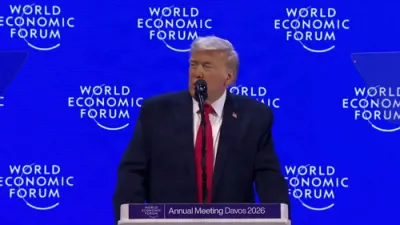
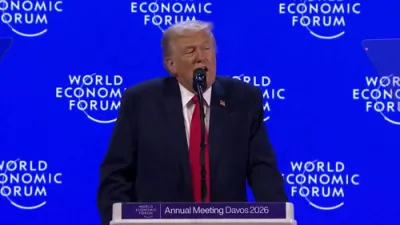
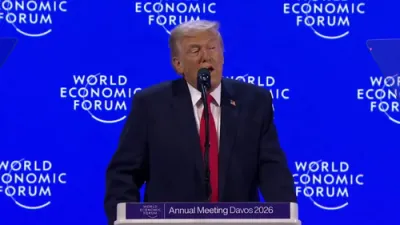
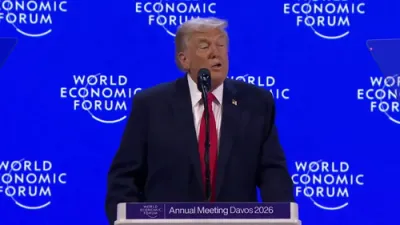
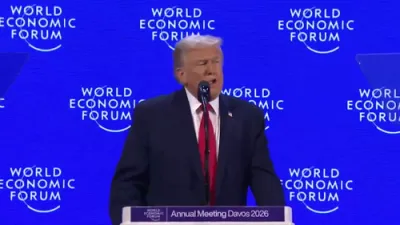
Newsom claimed the cancellation came shortly after President Trump delivered remarks highlighting U.S. achievements, suggesting a deliberate effort to silence dissenting political voices on an international stage. In public comments, the governor framed the incident as emblematic of what he described as “America in reverse,” arguing that freedom of speech and assembly were being selectively curtailed. He further linked the episode to ongoing national debates over book challenges, historical interpretation, and prior federal troop deployments to California during immigration protests in 2025.
“They made sure it was canceled,” Newsom said, asserting that the decision reflected a pattern of suppressing narratives that challenge the administration’s perspective. He accused federal actors of rewriting history and censoring facts, language that resonated strongly with his political base while drawing sharp criticism from opponents.
The White House quickly dismissed Newsom’s claims, characterizing him as a “third-rate governor” and rejecting the notion that the cancellation amounted to censorship. Administration officials suggested that any distancing from Newsom was a predictable consequence of his repeated public attacks on President Trump, rather than an infringement on constitutional freedoms. Supporters of the administration argued that participation in government-affiliated venues is discretionary and does not obligate officials to provide platforms for political adversaries.
Reaction to the controversy split predictably along partisan lines. Allies of Newsom portrayed the incident as an abuse of power and a warning sign for democratic norms, while supporters of President Trump viewed the governor’s remarks as political theater designed to elevate his national profile. To them, the dispute underscores a familiar dynamic in which criticism of administrative decisions is recast as suppression when access or privilege is denied.
As the debate continues, the Davos episode highlights the deep political polarization shaping domestic narratives abroad, where disagreements over access, messaging, and authority increasingly become symbolic battlegrounds in America’s broader cultural and political conflict.