צה"ל עלימינירט איסלאמישער דזשיהאד קאמאנדיר
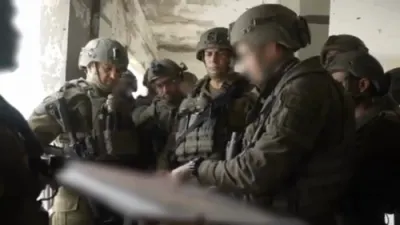
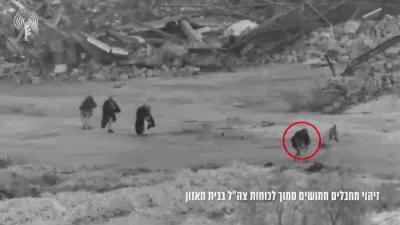
The Israel Defense Forces conducted a series of overnight and Monday airstrikes in Gaza targeting militants accused of rebuilding terrorist infrastructure and preparing new attacks against Israeli forces and civilians. Israeli officials stated that the operation was a direct response to what they described as a blatant violation of the fragile ceasefire, following the discovery of a tunnel breach near the security line and an armed attack originating from the Rafah area.
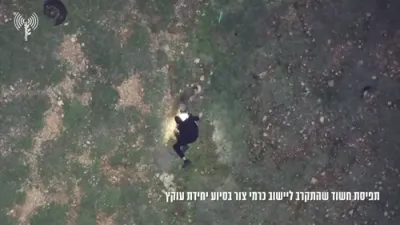
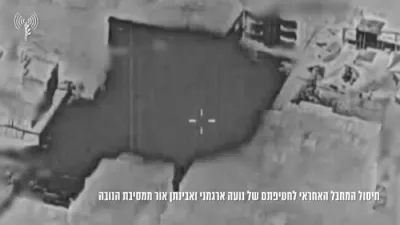
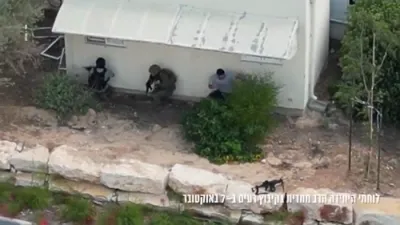
Among those reported killed were Ahmad Bayouk, identified by Israeli intelligence as a participant in the October 7 assault on Re’im, and Azem Abu Huli, described as a senior Islamic Jihad operative responsible for training fighters and facilitating weapons distribution. Israeli military sources characterized both individuals as high-value targets whose roles extended beyond past attacks to ongoing operational planning.
The strikes were carried out using precision-guided munitions and drone surveillance, with the stated objective of dismantling command structures and logistical networks used by Hamas and Palestinian Islamic Jihad. According to the IDF, the targeted sites included locations in Gaza City and Khan Younis believed to be linked to weapons storage, training activity, and tunnel infrastructure. The military emphasized that the operation was focused on militants actively engaged in preparing further hostilities rather than broad area bombardment.
Israeli officials framed the action as a defensive measure intended to prevent imminent threats and restore deterrence following the ceasefire violation. The tunnel breach near the boundary was described as a significant escalation, raising concerns about infiltration attempts, while the Rafah attack underscored the volatility of the current truce. In this context, the strikes were presented as part of a policy of preemptive disruption aimed at individuals and cells assessed to be operationally active.
The targeting of figures linked to the October 7 attacks reflects Israel’s ongoing strategy of pursuing those it holds responsible for previous assaults while simultaneously addressing emerging threats. Military planners have argued that removing experienced operatives who provide training, weapons, and tactical planning degrades the capacity of militant groups to conduct coordinated operations.
The broader security environment remains tense, with the late-2025 ceasefire repeatedly tested by localized incidents. Israeli leadership has signaled that while it is prepared to maintain the truce, violations involving armed activity or tunnel construction will trigger targeted responses. This approach seeks to balance containment of large-scale conflict with continued pressure on militant networks.
As operations continue, the focus remains on intelligence-driven strikes designed to disrupt planning cycles and prevent cross-border attacks. The IDF maintains that its actions are calibrated to address specific threats while minimizing wider escalation, though the situation on the ground remains fluid and subject to rapid change depending on developments along the Gaza perimeter.