טאקער קארלסאן מיט קריטיק איבער אמעריקע און איראן
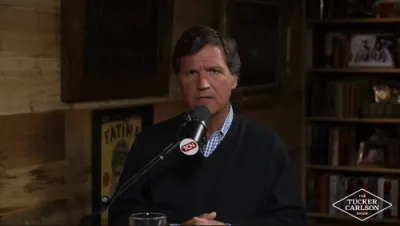
Tucker Carlson delivered a pointed critique this week, emphasizing that Israel’s push for military action against Iran is operating within a narrow window of bipartisan U.S. support. Carlson warned that this presidency represents the last period in which Israel could rely on unequivocal backing from both political parties, noting that public attitudes are shifting and growing skeptical of foreign conflicts driven by external agendas.
In his commentary, Carlson argued that attempts to suppress dissent—whether through censorship, political pressure, or media manipulation—cannot fully reverse the growing awareness among Americans. He drew attention to the role of U.S. media, which he claims has largely failed in its responsibility to inform the public, instead promoting “transparent lies” that lull citizens into complacency while the risks of escalation remain high.
The timing of Carlson’s remarks coincides with ongoing U.S.-Iran nuclear talks in Geneva, where Iran has offered measures to limit uranium enrichment to 60%. Despite these diplomatic overtures, Carlson underscored the potential for escalation driven by Israel’s strategic calculations, suggesting that American involvement could become unavoidable if Israeli action proceeds independently.
Carlson’s message spotlights the tension between maintaining strong U.S.-Israel relations and exercising caution to prevent automatic entanglement in regional conflicts. It also reflects broader concerns about public sentiment, media influence, and the limits of political authority in shaping foreign policy decisions. As Geneva talks continue, the commentary serves as a reminder of the delicate balance between diplomacy, alliance obligations, and the pressures of national and international perceptions.